
Last updated October 16, 2026
 Wrought iron
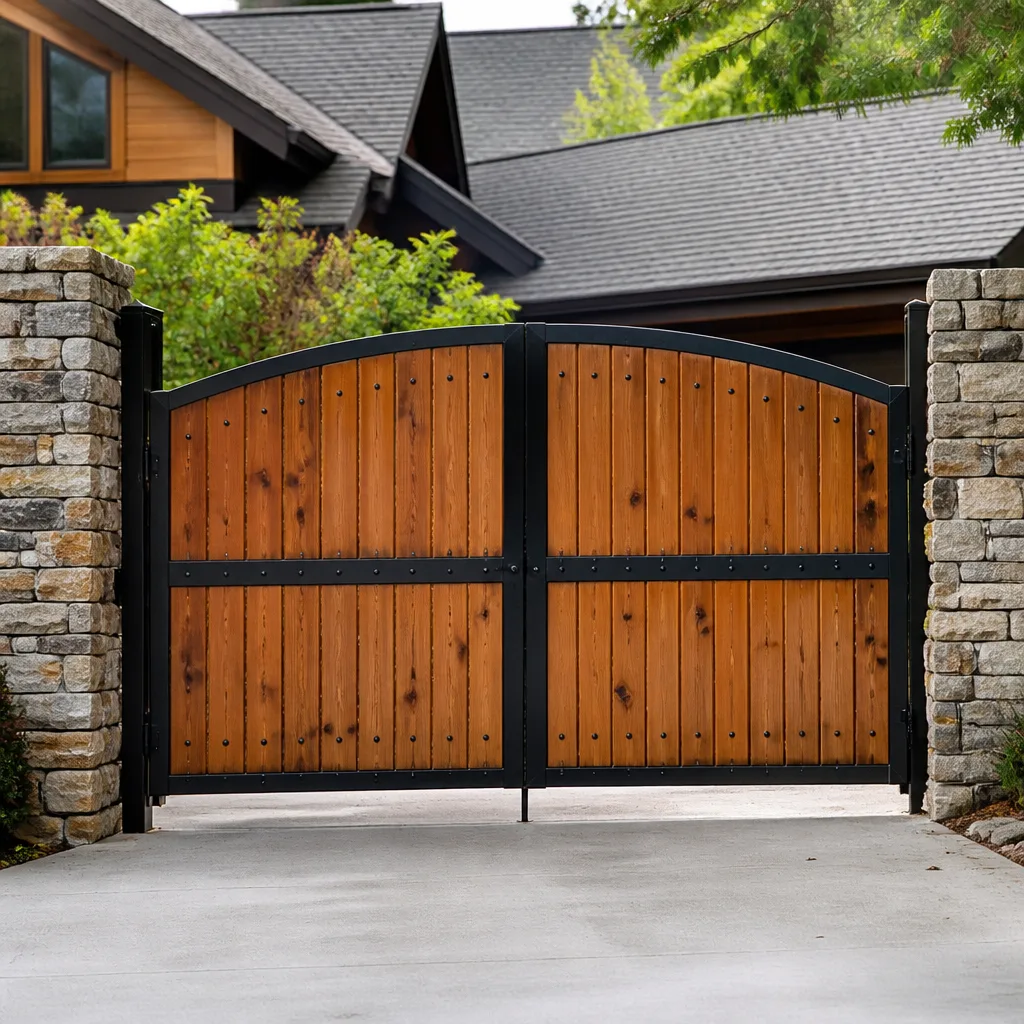 Wood & steel frame
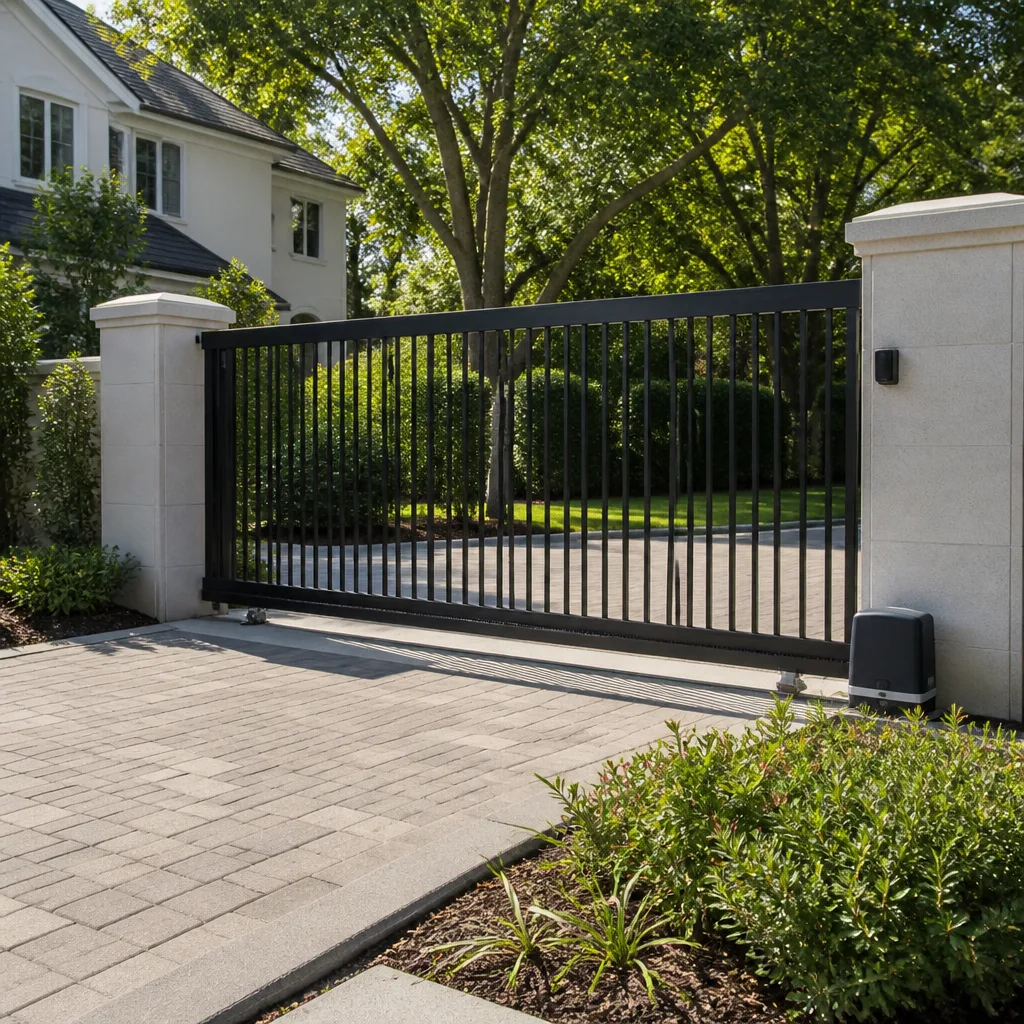 Sliding driveway gates
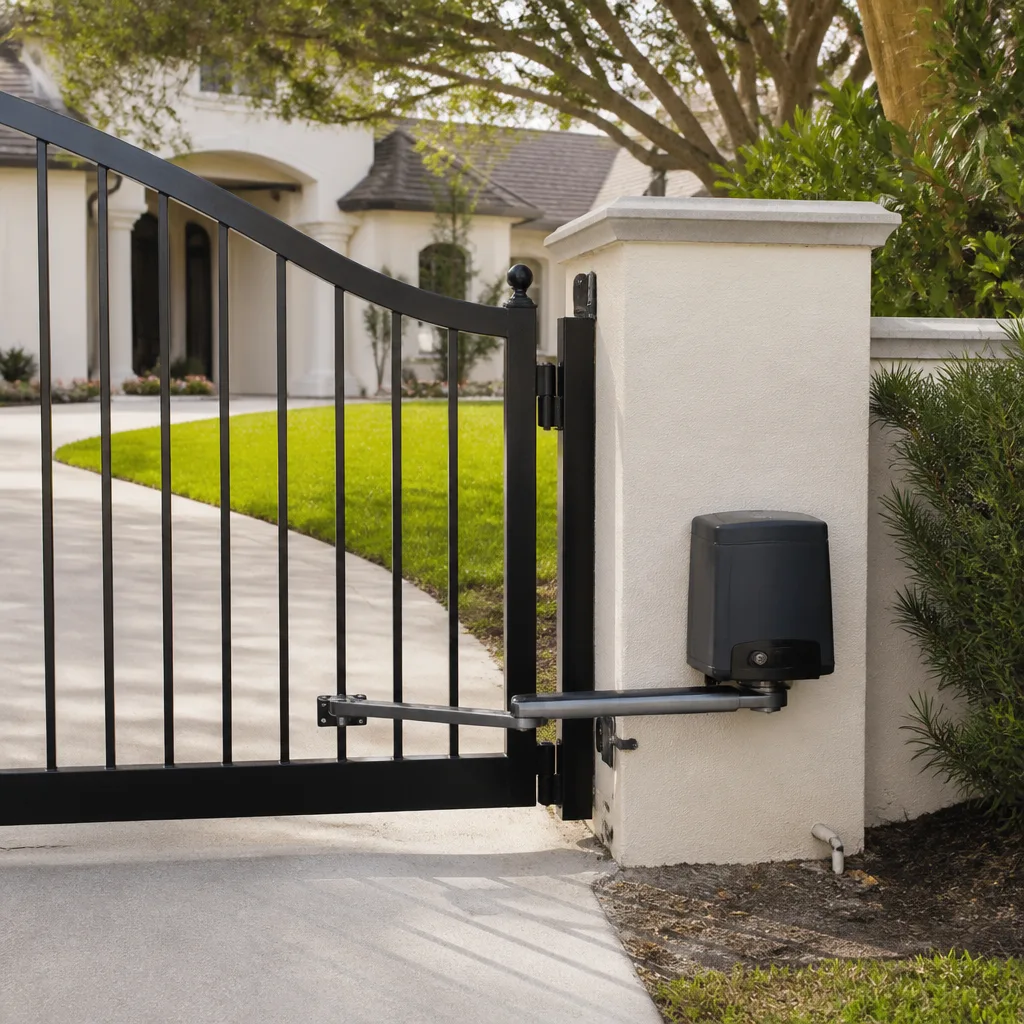 LiftMaster operators
Free on-site gate assessment - hinges, posts, and your LiftMaster or Nice gate operator checked before anything is quoted
The assessment is free and the quote is the invoice.
Get your free estimateDIY vs Professional Gate Repair: The Dallas Homeowner’s Decision Guide
The most dangerous DIY gate repair isn’t electrical. It’s adjusting a swing gate’s hinge tension without first checking whether the post is still plumb. A post that’s leaning even half an inch will pull the gate back out of alignment within weeks, stress the hinges until they crack, and leave you with a gate that sags worse than before you touched it. In Dallas, where clay soil expands and contracts through every wet-dry cycle, posts shift more than almost anywhere else in the country. This Gate Repair guide draws the line between repairs you can knock out on a Saturday morning and the ones that quietly turn a $40 fix into a $900 problem.
Styles & brands we work with
Quick Answer
Most Dallas homeowners can safely handle remote reprogramming, sensor cleaning and alignment, and basic lubrication. Weld repairs, post resets, operator wiring, and any job involving tensioned components like torsion springs belong with a licensed professional. The dividing line isn’t skill level. It’s whether the job carries a hidden failure mode that damages the gate, the operator, or a person.
Table of Contents
- The Go/No-Go Table: What You Can Safely DIY and What You Can’t
- The Dallas Clay-Soil Problem: Why Post Work Is a Professional Job
- The Tool and Parts Cost Reality Check
- Liability and Insurance: What Happens When a DIY Repair Fails
- Three Questions to Ask Yourself Before Starting Any DIY Gate Repair
- Brand-Specific DIY Notes: BFT, Linear, Viking, and Ghost Controls
- Common Mistakes to Avoid
- When to Call a Professional
- Frequently Asked Questions
- The Bottom Line
The Go/No-Go Table: What You Can Safely DIY and What You Can’t
We’ve been doing gate repair in Dallas since 2008, and we’ve seen the full spectrum of DIY outcomes, from genuinely impressive to “please don’t touch that again.” The table below reflects what we’ve learned about which repairs hold up when a homeowner does them, and which ones come back to bite. It’s a go/no-go list, not a skill ranking. A mechanical engineer who’s never opened a gate operator should follow the same boundaries as everyone else.
- Remote reprogramming: GO. Most operator remotes have a learn button on the main control board. The process is documented in the manual and takes under five minutes. Worst case, you erase a code and have to relearn it.
- Photo-eye sensor cleaning and alignment: GO. If your gate stops closing and reverses, the safety sensors are the first suspect. Wipe the lenses with a dry cloth and make sure the two sensors point directly at each other. Low risk, quick win.
- Hinge and roller lubrication: GO with caution. Use a dry silicone spray or white lithium grease on swing gate hinges and slide gate rollers. Avoid heavy grease that collects Dallas dust and clay grit. This is the safest preventive task on the list.
- Battery replacement in solar or backup systems: GO. Most backup battery swaps are plug-and-play if you match the voltage and terminal size. Disconnect power first, and don’t touch anything else while you’re in the enclosure.
- Hinge tension adjustment on a swing gate: NO GO. This is the trap. Tension adjustments assume the post is plumb and the leaf is square. If either is off, you’re tightening against a structural problem and accelerating the failure.
- Post reset or re-setting in concrete: NO GO. In Dallas soil, this job requires an oversized footing, proper drainage, and usually steel reinforcement. A bag of quick-set from the hardware store will fail within a season or two.
- Weld repair on a steel or wrought-iron gate: NO GO. A cracked weld is almost always a symptom of misalignment or metal fatigue, not a standalone break. Patching the weld without addressing the cause means you’ll patch it again in six months.
- Operator board replacement and wiring: NO GO. Modern operators from BFT, Linear, Viking, and Ghost Controls have boards with specific voltage requirements, limit settings, and safety inputs. One crossed wire can fry the board or bypass a safety edge.
For most homeowners, the safe zone is about 30% of the work that gate companies do. The other 70% involves either serious weight, serious voltage, or what we call “invisible misalignment” – problems you can’t see without measuring tools and field experience.
The Dallas Clay-Soil Problem: Why Post Work Is a Professional Job
Dallas sits on expansive clay soil, primarily Houston Black and Eagle Ford clays. These soils swell when wet and shrink when dry. A summer drought followed by a soaking fall rain can move a gate post a quarter inch in a month. That doesn’t sound like much, but a quarter inch at the base of a 7-foot post translates to a noticeable lean at the top, and a gate leaf that no longer lines up with its latch.
YouTube tutorials for gate post repair mostly come from regions with stable sandy or rocky soil. They show a hole, a bag of concrete mix, and a level, then call it done. In Dallas, that method fails for a specific reason: the clay shrinks away from the concrete during dry spells, leaving a gap around the footing. Water finds that gap, the clay swells, and the post gets pushed out of alignment again. The cycle repeats every year.
Professional post work in Dallas requires a deeper footing, usually 36 to 42 inches, with a wider base than the post. Reputable gate companies also add gravel drainage at the bottom of the hole so water doesn’t pool against the concrete. Some jobs call for rebar or a steel post bracket to decouple the post from direct soil contact. None of this is beyond a skilled homeowner with the right tools. But most homeowners find out their post is still moving a year after a $60 DIY reset, and then the professional repair costs more because the first attempt has to be dug out first.
We’ve repaired gates in Lake Highlands, Casa View, and Preston Hollow where the post had been re-set by a previous owner or a handyman, and the concrete puck came out of the ground in one piece with the post still attached. The hole was too shallow, the concrete was too weak, and the clay had done exactly what Dallas clay does. A post reset done correctly the first time would have cost less than the follow-up repair, and the gate would have worked through the next drought cycle.
If your gate post is leaning, wobbling when you push the gate, or showing a gap between the concrete and the soil after a dry spell, that’s a professional call. The fix isn’t complicated for someone who does it regularly, but the failure mode of a wrong fix is slow and expensive.
The Tool and Parts Cost Reality Check
Here’s the part most more guides & resources skip. They compare the cost of a part against the cost of a technician’s visit and declare DIY the winner. But that math only works if you already own the tools and your repair succeeds on the first try. In Dallas, with gate parts from local suppliers and big-box stores priced the way they are, let’s run the real numbers.
A typical DIY swing gate hinge replacement costs $25 to $60 for the hinges themselves. But to do the job safely, you need a floor jack or a gate support stand to hold the leaf while you swap hinges. That’s $40 to $90 if you don’t already own one. Add a level, a decent socket set, and penetrating oil for the old bolts, and you’re at $100 to $180 in tools for a job you’ll do once. If the old hinge bolts are seized, you may need a grinder or a drill, another $40 to $80.
Now assume the job goes slightly wrong, which is common. The gate drops a quarter inch during the swap, and now it doesn’t latch. You adjust, you re-adjust, you shim, you spend another Saturday on it. Or the hinge you bought is a close but wrong match for an older gate, and you discover it after drilling new holes. The gate now has extra holes in it, and the new hinge still isn’t right. A professional hinge replacement in Dallas typically runs $180 to $350 parts and labor for a standard residential gate. The DIY version, with tools and one wrong part, often lands in the same range, before factoring in your time.
This is the cost reality of DIY gate repair in Dallas: for repairs under about $150 in parts, DIY saves money only if nothing goes wrong and you never have to buy a tool. For repairs in the $150 to $400 range, DIY and professional costs often converge once you account for tools and the realistic chance of a mistake. For jobs over $400, the professional quote almost always beats the true cost of a homeowner buying one-time tools and spending multiple weekends on a job that a technician does in a few hours.
Our Gate Repair in Dallas page has more detail on typical repair pricing across the metro area, broken down by job type.
Liability and Insurance: What Happens When a DIY Repair Fails
A gate is a moving barrier that weighs hundreds of pounds and is powered by an electric motor. When it fails, it can injure a person, damage a vehicle, or block a driveway in a way that delays emergency access. The liability question for DIY gate repair isn’t academic, and it’s not something most homeowners think about until something goes wrong.
If you repair your own gate and that repair fails, the consequences fall into three categories. First, property damage: a swing gate that comes off its hinges can strike a car, a fence, or the house itself. Your homeowner’s insurance may cover the damage, but the deductible commonly runs $1,000 to $2,500 in Dallas, and a claim can raise your premiums. Second, personal injury: if a guest, a delivery driver, or a neighbor’s child is injured by a gate that you repaired, your liability is the same as if you had built the gate from scratch. Homeowner’s policies cover liability, but if your insurance company determines the repair was negligently done, they may deny a payout or pursue subrogation. Third, operator damage: a wiring mistake on a BFT or Viking operator can destroy the control board. That’s a $300 to $600 part, and the operator manufacturer will not warranty a board that was damaged by incorrect installation or unauthorized modification.
Professional gate companies in Texas carry general liability insurance, usually at levels that specifically cover gate and fence work. When a licensed technician makes a mistake, their insurance pays, and the repair company is on the hook to make it right. When a homeowner makes a mistake, the homeowner’s insurance is the safety net, and it’s a net with holes in it. Dean Prescott, who leads Portcullis Gate Repair Dallas, has seen firsthand what happens when a failed DIY repair injures someone: the savings evaporate instantly, and the legal exposure is far larger than the original repair bill.
There’s also a code consideration. Dallas requires permits for some types of gate and fence work, particularly new installations and major structural changes. An unpermitted repair that fails and causes damage can complicate an insurance claim. Professional gate companies know which jobs require permits in Dallas and which ones don’t, and they handle the paperwork as part of the job.
Three Questions to Ask Yourself Before Starting Any DIY Gate Repair
Before you pick up a wrench or open an operator enclosure, run through these three questions. Answer honestly. A “no” to any single one means the job is a professional call, no matter how confident you feel.
Question 1: Do I understand the failure, or do I understand the symptom?
A gate that sags is a symptom. The failure could be a worn hinge, a bent post, a cracked weld, or a shifted footing. If you can’t point to the specific failed component and explain why it failed, then your repair has a good chance of treating the symptom while the root cause keeps working in the background. This is the number one reason DIY gate repairs fail in Dallas: the homeowner fixes the visible problem and never finds the invisible one underneath. If you can’t articulate the root cause, stop and call someone who can.
Question 2: What happens if I get this wrong?
For some repairs, the failure mode is trivial: the remote doesn’t pair, and you try again. For others, the failure mode is dangerous: a tensioned spring releases, a gate leaf falls, a 240-volt line shorts. Before you start, write down the realistic worst-case outcome of a mistake. If the worst case involves personal injury, significant property damage, or the destruction of a $300 to $600 operator board, the risk-adjusted math shifts hard toward professional service. This one question, answered honestly, filters out most of the repairs that go wrong.
Question 3: Do I have the tools, the time, and the physical help?
Most gate components are heavy. A standard residential swing gate leaf weighs 150 to 400 pounds. A slide gate can weigh more. If your repair requires lifting, supporting, or moving the gate, you need a proper support stand or a second person. You also need the right sockets, a torque wrench for structural bolts, and patience. If the answer to any part of this question is “no,” the project just became more expensive and more dangerous than the professional quote. The cost of buying the right tools for a one-time job often exceeds the labor portion of a professional repair.
If you answer “no” to even one question, or if you’re not sure, call a gate company before you start. The estimate is free, and the information will either confirm your DIY plan or save you from a costly and painful failure. Our team at Portcullis Gate Repair Dallas walks homeowners through this exact decision framework every week, and we’re happy to talk through a repair with you before you commit to anything.
Brand-Specific DIY Notes: BFT, Linear, Viking, and Ghost Controls
Different gate operator brands have different DIY profiles. Some are genuinely homeowner-friendly for basic maintenance. Others will punish a small mistake with a fried board. Here’s what we tell Dallas homeowners about four of the most common brands we service.
BFT: BFT operators are built for heavy use, with a strong presence in Dallas HOA communities and multi-tenant properties. The control boards are sophisticated, and many models use encoder-based limit sensing rather than physical limit switches. What this means for a homeowner: you can’t “eyeball” the limit settings. If the gate stops short or over-travels after a power outage, resetting the limits without understanding the encoder process can throw the operator into a fault state that requires a trained tech to clear. BFT also uses a specific programming sequence for remote compatibility. Basic remote programming is fine to DIY. Anything involving the drive chain, gearbox, or encoder is not.
Linear: Linear operators are common on Dallas residential gates because they’re reliable and widely available. The older models have mechanical limit switches that are relatively easy to understand and adjust. The newer models have diagnostic LEDs that help with troubleshooting. Linear is probably the friendliest of the four brands for a careful homeowner. Remote programming, force adjustment, and sensor wiring are all documented in plain language in the manual. The risk zone with Linear is the same as everywhere else: the electrical enclosure. Turn off the breaker and take a photo before you unplug anything.
Viking: Viking operators are popular for heavy slide gates in Dallas, especially on larger properties and commercial frontages. They hold up well, but they’re not a DIY brand. Viking control boards have specific dip-switch and potentiometer settings for force, delay, and safety loops. A wrong setting can make the gate ignore its safety inputs, which turns a normally safe gate into a crushing hazard. We don’t recommend Viking owners do anything beyond remote programming and keeping the track clear. The rest is a professional service call.
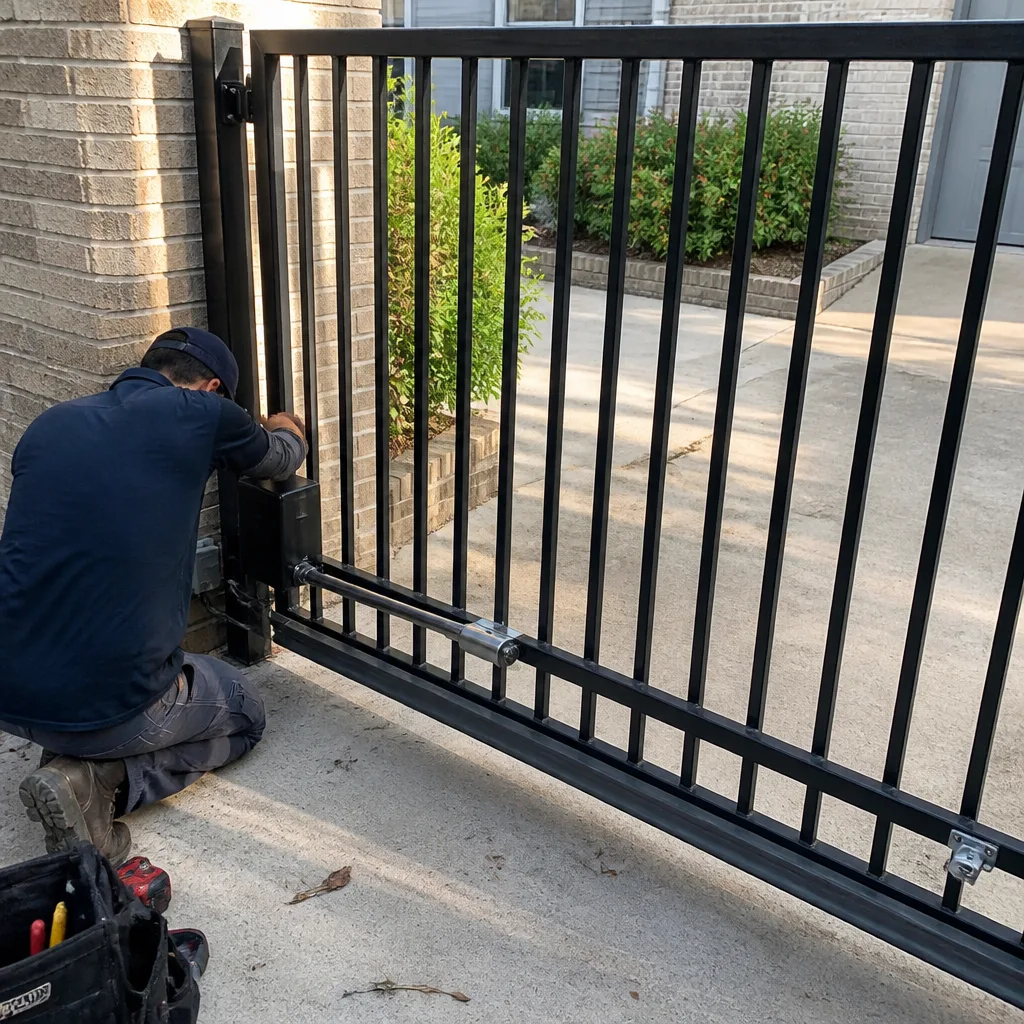
Ghost Controls: Ghost Controls is the exception on this list because it’s aimed at residential users who do their own installation. The motors are compact, the arms are designed for easy clamping, and the app-based programming is genuinely straightforward. Ghost Controls is a reasonable DIY product for a homeowner who wants to install an operator on an existing gate, provided the gate itself is square, plumb, and structurally sound. The limitation: if your gate isn’t structurally sound, no operator, including a Ghost Controls unit, will work correctly for long. The operator amplifies existing gate problems rather than repairing them. For a gate that’s already in good shape, Ghost Controls gives a handy homeowner a viable path. For a gate that needs structural work first, the operator is the wrong place to start.
For electric gate issues on any brand, our Electric Gate Repair in Dallas page explains what we check first and what the most common failures look like in Dallas conditions.
Common Mistakes to Avoid
- Lubricating the operator chain or belt with WD-40. WD-40 is a degreaser, not a lubricant, and it actually strips the protective film from chains and rollers. Use a proper lithium grease or a dry lubricant designed for gate operators. In Dallas dust, the wrong lubricant turns a chain into a grinding paste.
- Tightening hinge bolts before checking post plumb. If the post is leaning, tightening the hinges just locks in the misalignment and transfers stress to the hinge bodies. Measure plumb first. If the post is off, tightening is not a repair, it’s a delay tactic.
- Adjusting the operator’s force setting to “fix” a sticking gate. When a gate binds and the operator struggles, the answer is to fix the sticking point, not to crank up the force. Raising the force on a Viking or Linear operator can override the safety systems and create a pinch hazard. In Dallas, where gates frequently bind from soil movement against the gate or frame, this is a common and dangerous mistake.
- Replacing a blown fuse without finding the short. Fuses blow for a reason. Popping in a new fuse without locating the short means the next failure could be the board instead of a three-dollar fuse. Trace the circuit or call someone who can.
- Buying a universal remote without confirming compatibility. “Universal” remotes work with many operators, but not all, and not always with rolling-code systems used by BFT and Viking. Check the operator manual for the exact remote frequency and protocol before buying. In Dallas, a wrong remote purchase usually ends with a trip back to the store and a still-dead gate opener.
- Treating a cracked weld as a standalone fix. Welding a crack without finding why the metal failed in the first place means the crack will return, usually bigger and in the same spot. On Dallas gates, the root cause is almost always post movement or a misaligned leaf.
- Ignoring the gate’s drainage. Dallas clay holds water. If the gate’s lower hinge or roller sits in a puddle after rain, the moisture accelerates corrosion and creates the very binding problem that leads to operator strain. Fix drainage before you lubricate anything.
When to Call a Professional
Some repairs cross the line from “risky” to “actively dangerous” the moment you pick up a tool. Call a professional if your gate is leaning on its post, if you hear grinding in the operator gearbox, if you see exposed or frayed wiring in the operator enclosure, or if the gate moves on its own without input. These are not diagnostic puzzles for a Saturday afternoon. They’re structural and electrical failures that can injure someone or destroy the operator. If your gate repair involves a tensioned spring, a post that moves, a weld, or anything inside the operator enclosure beyond the remote programming buttons, the professional call is the cheaper call in the long run. Portcullis Gate Repair Dallas offers free estimates in Dallas – call (325) 225-5440 to schedule one. We’re a Kingswell company, which means the price is in writing before any work starts, and the repair carries a written 365-day guarantee.
Frequently Asked Questions
Gate repair in Dallas typically runs $150 to $600 for most residential repairs, depending on the job. A hinge replacement falls on the lower end, a post reset lands in the middle, and an operator board replacement sits near the top. Full operator replacement can run $900 to $2,500 including parts and labor. These ranges are for standard residential gates and reflect the Dallas market as of this year. Call (325) 225-5440 for an exact quote – estimates are free.
You can safely fix your gate yourself in Dallas if the job is remote programming, sensor cleaning and alignment, hinge or roller lubrication, or backup battery replacement. Those four repairs are low-risk and hard to get wrong. Structural work like post resets, weld repair, and operator wiring should go to a professional, especially in Dallas where clay soil makes post work unreliable when done casually. Follow our Gate Repair Maintenance Checklist for Dallas Homeowners to stay ahead of problems.
The hardest part of gate repair in Dallas is keeping posts plumb in expansive clay soil. Houston Black clay shrinks during summer droughts and swells after fall rain, which moves posts a fraction of an inch each year. That small movement compounds into sagging gates, misaligned hinges, and cracked welds. The repair itself is straightforward; preventing recurrence is what separates a garage-level fix from a professional one.
Most repairs in Dallas do not require a permit, including hinge replacement, operator repair, sensor replacement, and lubrication. New gate installations and major structural changes, like replacing a post footing or building a new gate across a driveway, often do require a permit. A professional gate company will know which jobs need permitting in Dallas and will handle the paperwork as part of the project.
Most standard gate repairs in Dallas, like a hinge replacement or a sensor repair, are completed in one visit of 1 to 3 hours. Operator board replacement usually takes 1 to 2 hours on site. Post resets are the exception: the concrete needs time to cure before the gate can bear weight, so the full job may span 2 to 4 days including curing time. Our Gate Installation in Dallas page covers timelines for larger projects.
Dallas thunderstorms frequently knock out gate operators through power surges or by tripping safety sensors with lightning. The most common fix is resetting the breaker and checking whether the operator’s internal fuse has blown. If the operator powers up but the gate won’t move, the safety sensors may have been knocked out of alignment by wind-driven rain. If the operator is completely dead after a storm, the control board may need replacing, and that’s a professional repair. Call (325) 225-5440 for a same-day storm damage assessment.
The Bottom Line
DIY gate repair in Dallas works best when the job is simple, the tools are already in your garage, and the worst-case mistake is a wasted afternoon. Remote programming, sensor alignment, and lubrication all fit that description. But Dallas’s clay soil, the weight of a typical residential gate, and the electrical complexity of modern operators from BFT, Linear, Viking, and Ghost Controls mean that roughly 70% of gate repairs carry a hidden risk that makes professional service the safer and often cheaper option. Before you start any DIY gate repair, ask the three questions: Do I understand the true failure? What happens if I’m wrong? Do I have the tools and help? A “no” on any one of them means it’s time to make a call instead of a mistake.
If you’re in Dallas and weighing a DIY repair against a professional fix, we’re glad to help you think it through. Call (325) 225-5440 for a free estimate, or visit our Portcullis Gate Repair Dallas home page to learn more about how the Kingswell Guarantee works. The price is always in writing before the work begins, and every repair carries a written 365-day guarantee.
Written by Dean Prescott, Owner at Portcullis Gate Repair Dallas, serving Dallas since 2008.
See the difference
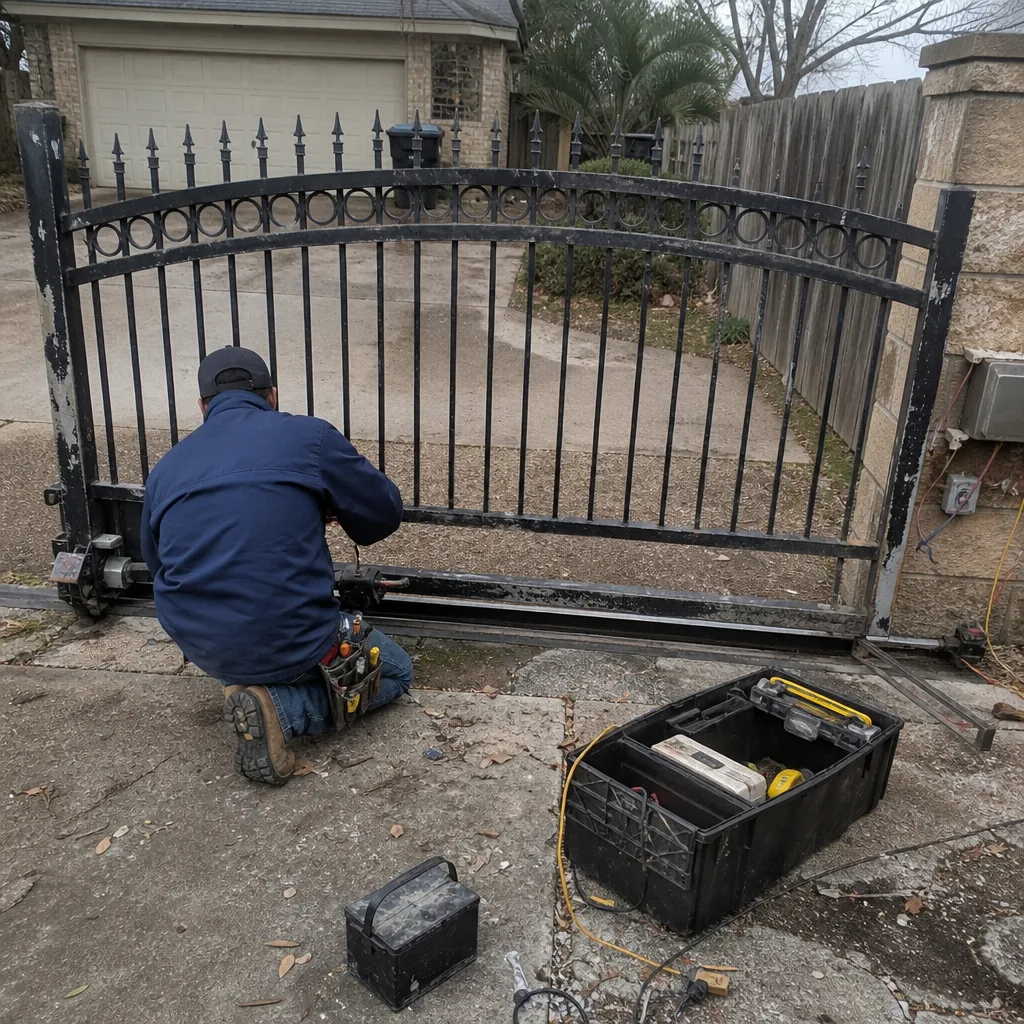 Before
 After
After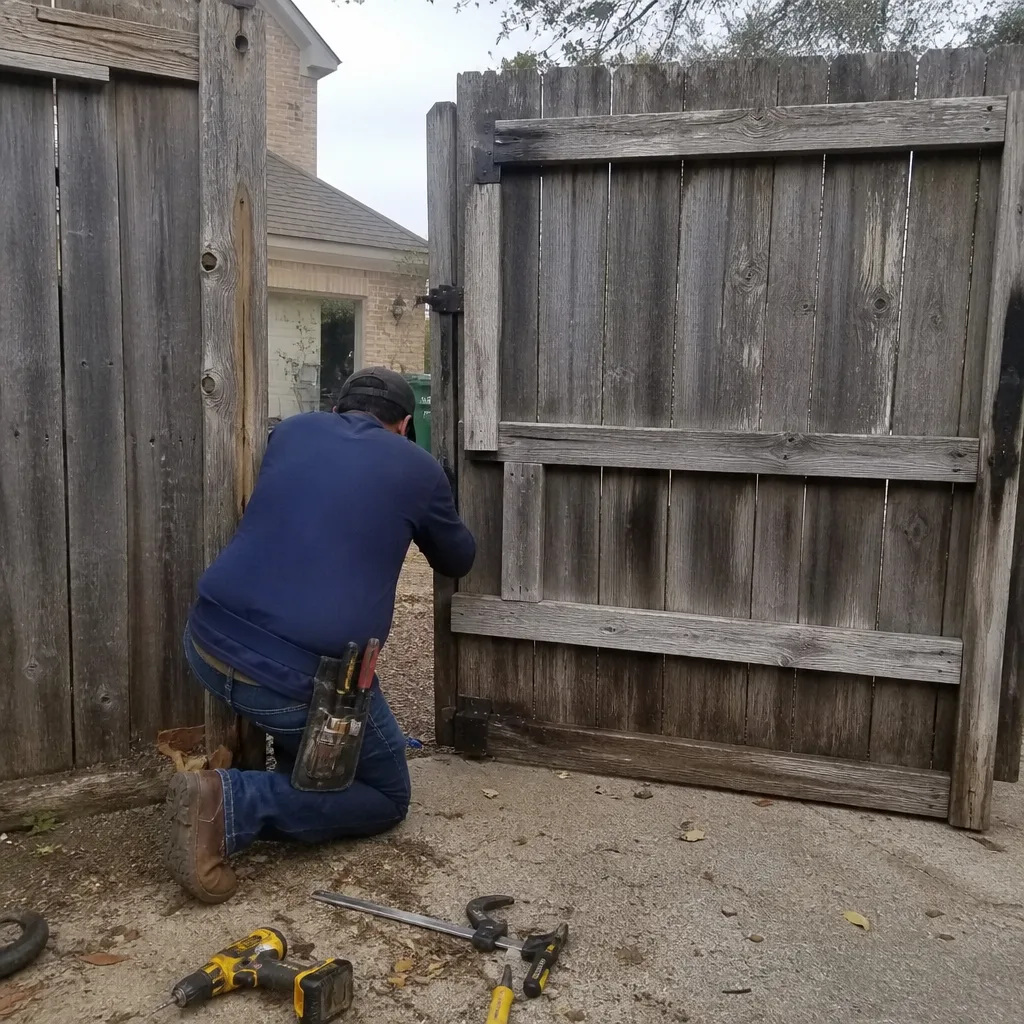 Before
 After
After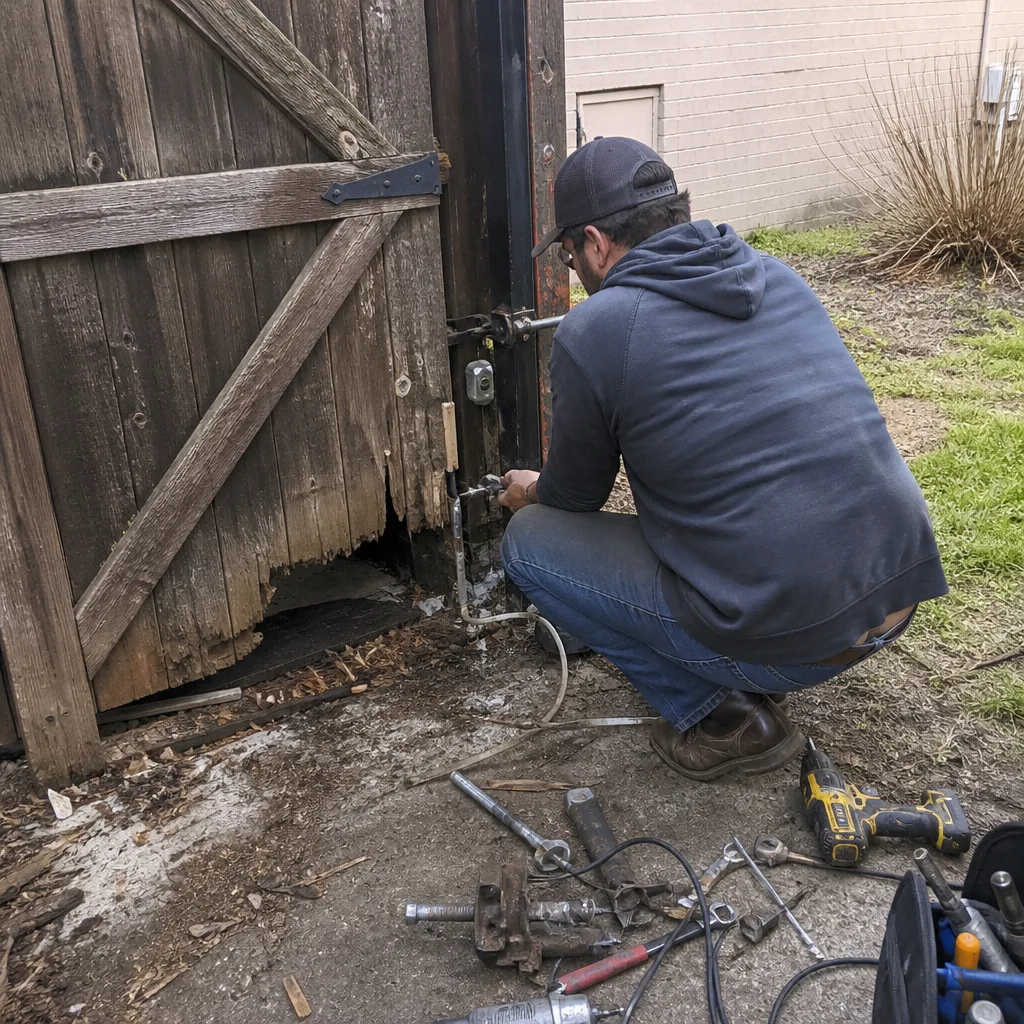 Before
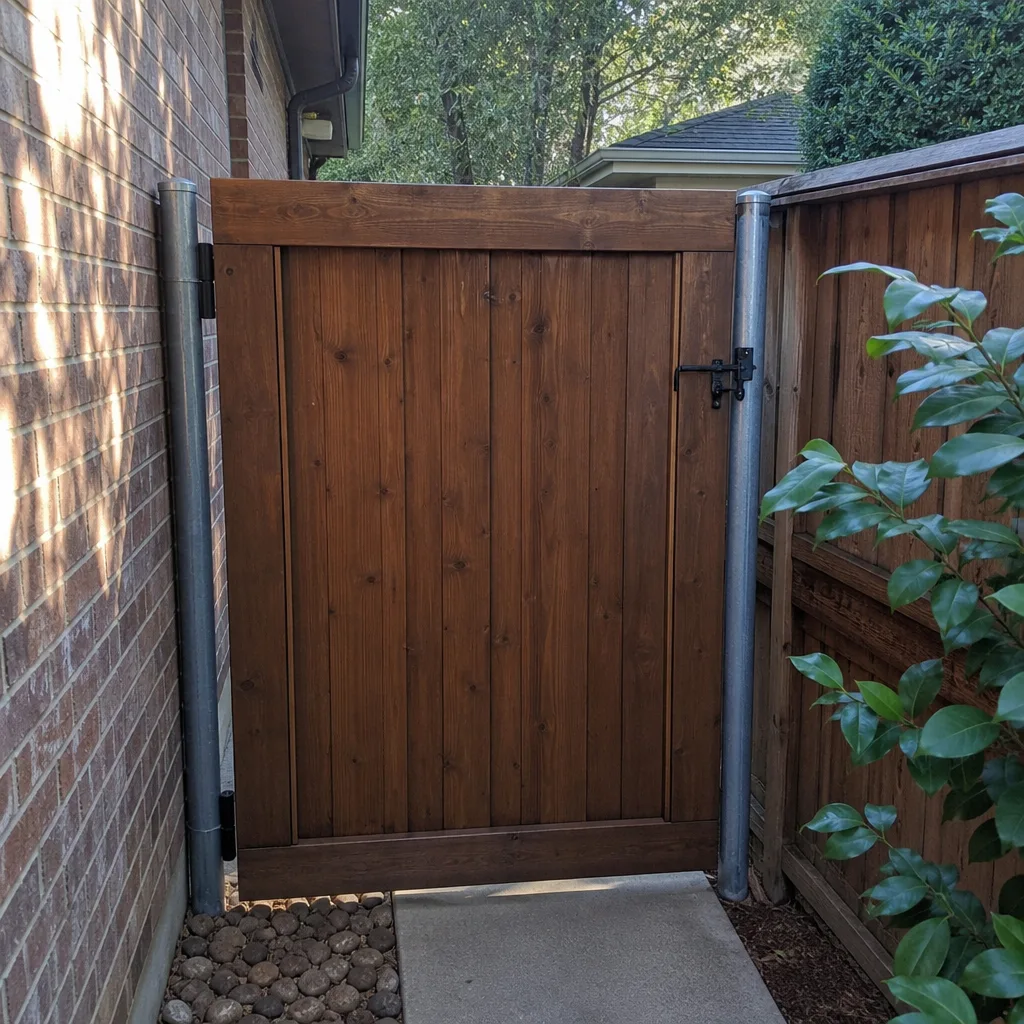 After
After