
Last updated October 16, 2026
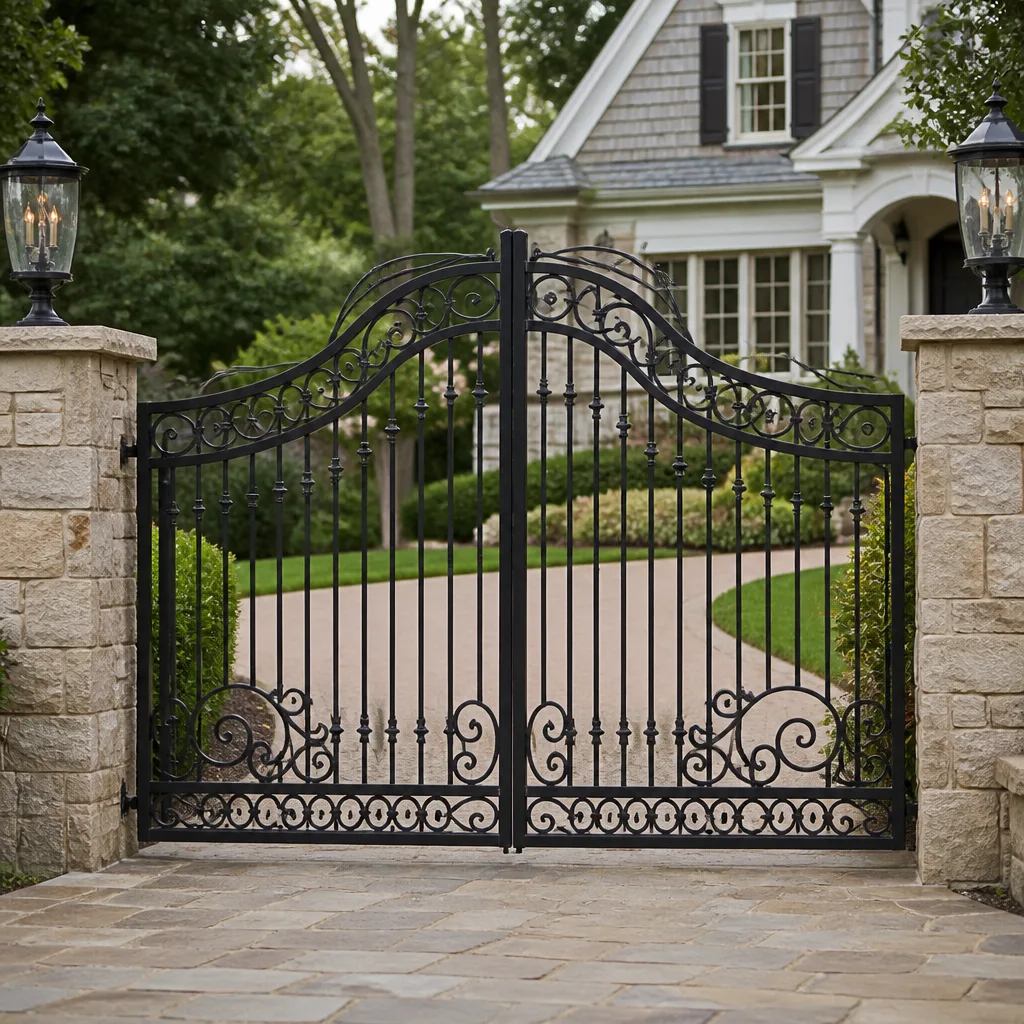 Wrought iron
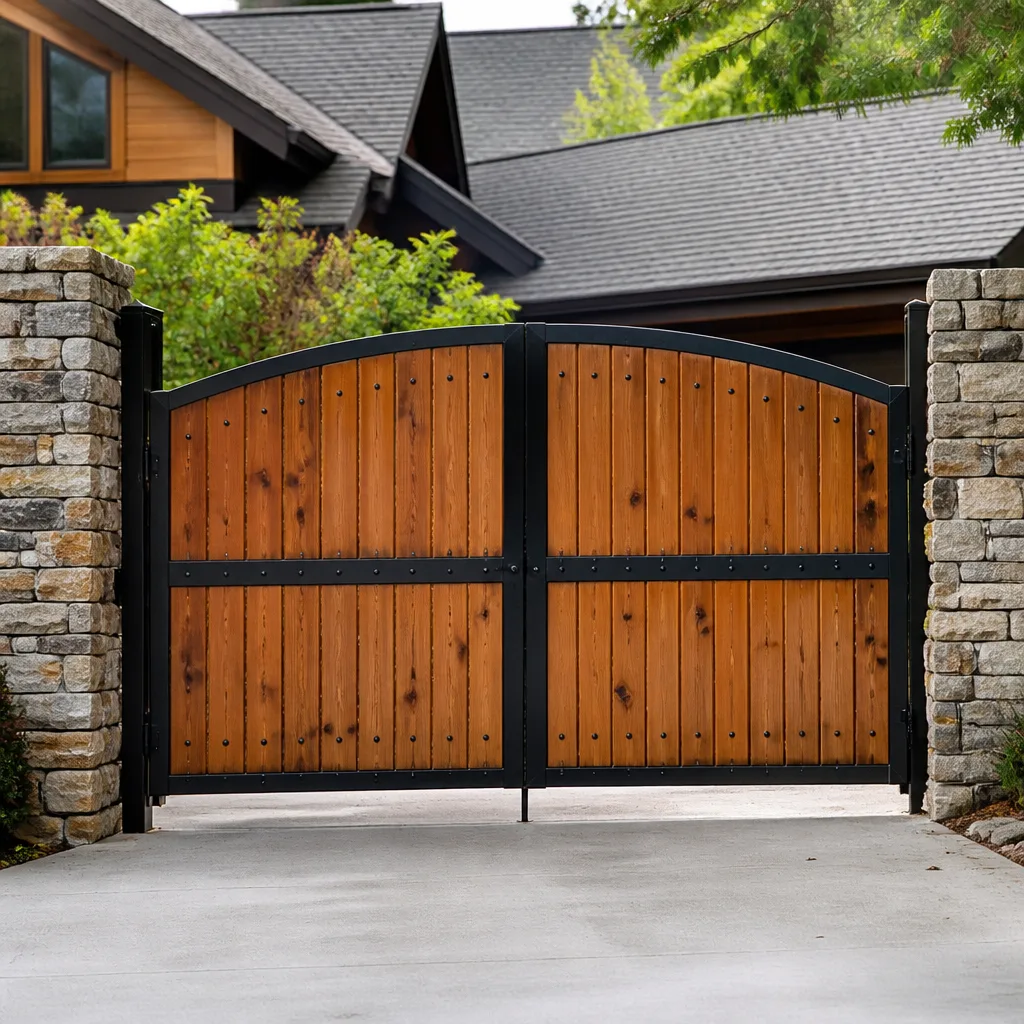 Wood & steel frame
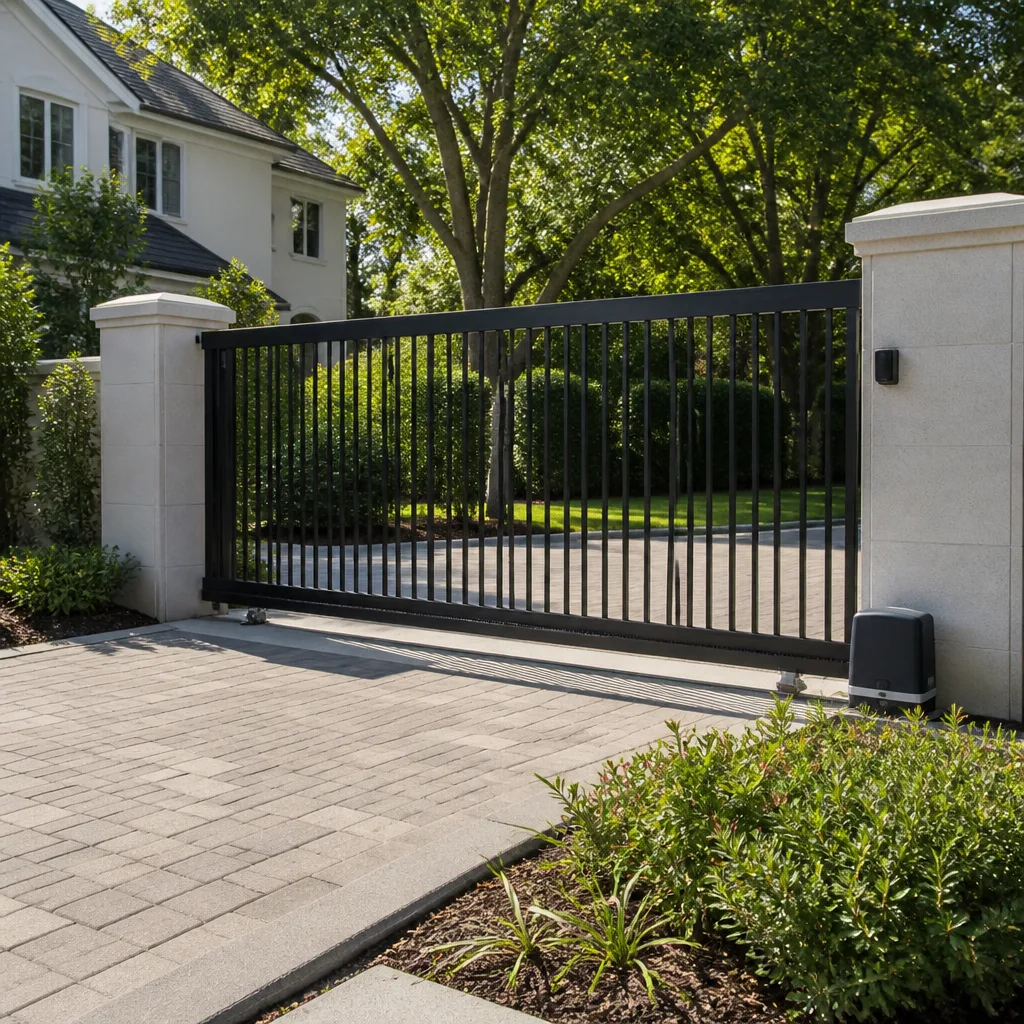 Sliding driveway gates
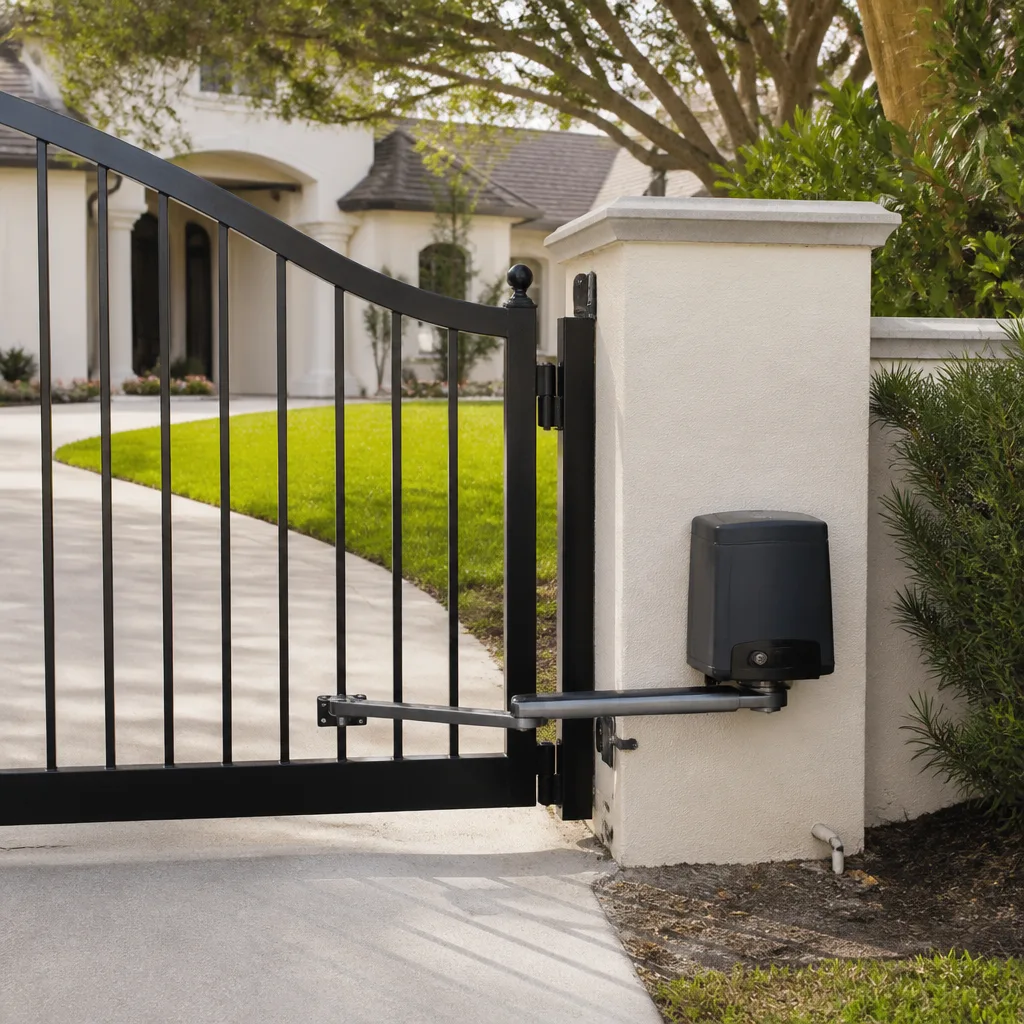 LiftMaster operators
Free on-site gate assessment - hinges, posts, and your LiftMaster or Nice gate operator checked before anything is quoted
The assessment is free and the quote is the invoice.
Get your free estimateGate Repair Permits, Codes & Inspections in TX: What You Need to Know
A homeowner in Dallas paid $3,200 to widen a driveway gate opening without a permit. The inspector never came, the gate worked fine, and the project felt finished. The problem surfaced eighteen months later when a buyer’s attorney flagged the unpermitted work during closing and the deal nearly collapsed. The repair cost another $900 in permit fees, engineering review, and re-inspection before escrow could move forward. This guide explains exactly when gate work in Dallas requires a permit, what municipal codes actually say, how HOAs fit into the picture, and how to keep a gate repair from becoming a title problem. By the end, you’ll know which repairs are no-permit work, which modifications trigger the Dallas Development Code, and what a proper inspection looks like.
Styles & brands we work with
Quick Answer
Most gate repairs in Dallas, Texas do not require a permit. Replacing a hinge, swapping a gate operator motor, or fixing a broken weld on an existing gate is considered routine maintenance under the Dallas Development Code, and no permit is needed. A permit is generally required when you move a gate post, widen the opening, change the gate’s structural design, or add an electric operator to a gate that was previously manual. Permits typically cost between $150 and $600 depending on the scope and municipality, and the full permitting process usually takes one to four weeks from application to final inspection.
Table of Contents
- Repair vs. Modification: Where Dallas Draws the Line
- What the Dallas Development Code Actually Requires
- How Plano, Frisco, and Irving Compare
- When HOA Gate Standards Conflict with City Code
- Adding an Electric Operator to a Manual Gate: The Permit Process
- What an ‘As-Built’ Inspection Means for Gate Work
- How Unpermitted Gate Work Shows Up on a Title Search
- Common Mistakes to Avoid
- When to Call a Professional
- Frequently Asked Questions
- The Bottom Line
Repair vs. Modification: Where Dallas Draws the Line
The single most important distinction in Texas gate permitting is the difference between a repair and a modification. A repair restores something to its original condition. A modification changes the structure, footprint, electrical load, or function of the gate. Dallas and most surrounding municipalities only require permits for the latter.
Here’s the practical breakdown we use with customers in Dallas every week:
No Permit Required (Routine Repair)
- Replacing a worn hinge, bracket, or roller on an existing gate
- Swapping a failed gate operator motor with a same-voltage replacement
- Welding a cracked gate frame or re-hanging a sagging gate leaf
- Replacing a keypad, remote receiver, or safety sensor
- Rebuilding or replacing a damaged gate panel using the existing posts
- Adjusting gate travel limits, closing force, or auto-close timing
Permit Required (Modification)
- Moving an existing gate post to widen or narrow the opening
- Adding a second gate leaf where a single leaf previously operated
- Installing a new gate where no gate existed before
- Adding an electric operator to a manual gate (in Dallas and most suburbs)
- Changing the gate’s swing direction so it opens over the public sidewalk instead of into the property
- Raising the gate height above what local zoning allows for the district
A good rule of thumb: if the work involves the posts, the opening width, or new electrical infrastructure, assume a permit is required until you confirm otherwise. If the work involves the moving parts, the operator, or cosmetic repairs on existing structure, you’re almost always in the clear. When in doubt, call the city’s building inspection office before the first bolt is turned. They’ll tell you in five minutes whether a permit applies.
For homeowners in Dallas who want help navigating this, our Portcullis Gate Repair Dallas home page includes an overview of the permit-related services we handle, or you can jump straight to our Gate Repair in Dallas page for repair-specific guidance.
What the Dallas Development Code Actually Requires
The Dallas Development Code governs gates as part of the broader fence and screening regulations found primarily in Section 51A. The city’s approach is practical: gates attached to existing permitted fences or walls are treated as part of that structure, while standalone or newly automated gates trigger additional review.
Dallas requires a fence or gate permit (often issued as a “fence permit” or “accessory structure permit”) when the work meets any of these thresholds:
- New construction. Any new gate, whether manual or electric, installed at a property line, driveway entrance, or pedestrian access point requires a permit before installation begins.
- Structural alteration. Moving, replacing, or adding posts that support any gate changes the load path. Dallas treats this as new construction for permitting purposes, even if the rest of the fence stays in place.
- Automation of a previously manual gate. The electrical load is new, the operator requires a dedicated circuit or branch wiring, and the safety requirements change. Dallas requires an electrical permit for the power run and the operator, often bundled with the fence permit.
- Height or setback changes. If a gate repair changes the height of the gate or its distance from the property line, zoning review may be required. Front-yard gates in Dallas residential districts have maximum height limits, typically 4 feet in the front yard for solid screens or 6 to 8 feet for open ornamental gates depending on the specific district.
In our experience, the permit Dallas homeowners most commonly overlook is the one for adding an operator to a manual gate. Plenty of customers assume it’s like installing a garage door opener. It isn’t. The city’s electrical inspection applies to the operator wiring, and the building permit applies to the structural changes that often accompany the automation, like reinforcing the post or adding a catch post for the operator arm.
Dallas also enforces a “right-of-way” rule for gates that swing outward over a public sidewalk. If the gate arm or gate leaf extends over city right-of-way when open, the city can require the gate to swing inward or be set back further from the property line. This often comes up in older Dallas neighborhoods like Lakewood or Oak Cliff, where front yards are narrow and driveway gates sit close to the sidewalk.
How Plano, Frisco, and Irving Compare
If you live in a Dallas suburb, don’t assume that what works in Dallas works where you live. Each municipality in the metroplex has its own fence and gate ordinances, and the differences can be material. Here’s a quick comparison based on current published requirements and common practice:
| City | Repair Permit Needed? | New Gate Permit? | Automation Permit? | Typical Permit Cost |
|---|---|---|---|---|
| Dallas | No (routine repairs) | Yes | Yes | $150 – $500 |
| Plano | No (routine repairs) | Yes | Yes | $200 – $600 |
| Frisco | No (routine repairs) | Yes | Yes | $175 – $550 |
| Irving | No (routine repairs) | Yes | Yes (electrical permit) | $150 – $450 |
Plano is known for a more thorough inspection process than Dallas on gate projects, particularly for automated gates in residential areas. Frisco requires a site plan showing gate setback, height, and swing direction when applying for a new gate permit. Irving bundles gate automation under both a fence permit and a separate electrical permit, which means two different inspections: one for the structure and one for the wiring.
One point worth noting: these municipalities all use different permitting software and fee schedules. The cost ranges above reflect typical single-family residential gate projects. Commercial or multi-family gate work runs higher. And if your property is in an unincorporated area of Dallas County, you may not need a city permit at all, but you should check with the county for any applicable regulations before beginning work.
Our Gate Installation in Dallas page covers some of the suburb-specific considerations we run into on new gate projects, including the permitting differences.
When HOA Gate Standards Conflict with City Code
A gate meets city code and still violates HOA standards. Or it meets HOA standards and fails city code. Both situations happen regularly in Dallas, and the resolution process matters more than the conflict itself.
Here’s the hierarchy to understand: city code is law, and the HOA’s covenants, conditions, and restrictions (CC&Rs) are a private contract. When they conflict, city code always wins. The city will not enforce your HOA’s CC&Rs, and the HOA cannot override city code. What this means in practice: if your HOA requires a gate height or material that violates Dallas zoning, you apply for a city permit for what the city allows, and then you deal with the HOA separately.
Common conflict scenarios we’ve seen in Dallas area HOAs:
- HOA requires a solid privacy gate in a front yard where Dallas zoning limits front-yard gates to open ornamental styles. The city permit will only approve the open style. The homeowner then has to apply for an HOA variance or accept the city-compliant design.
- HOA bans automated gates but the homeowner wants to add an operator for accessibility reasons. The city will permit the automation if it meets setback and right-of-way rules, but the HOA can still enforce its ban and issue fines. This has to be resolved with the HOA board before work begins.
- HOA requires a specific gate brand or operator type that the city’s electrical inspector flags for safety concerns. The inspector’s ruling controls; the HOA has no authority to override a failed inspection.
- HOA approval takes longer than the city permit. In our experience, the HOA architectural review committee often takes 30 to 60 days to approve a gate change, while the Dallas permit might take two weeks. Submit both applications simultaneously so one doesn’t hold up the other.
The cleanest approach is to get the HOA’s written approval first, then submit the city permit application with that approval attached. If the HOA says no to something the city permits, you have a decision to make, but at least you’ll know before you’ve spent money on hardware. For electric gate work, our Electric Gate Repair in Dallas page walks through the automation process and what we check before recommending a permit application.
Adding an Electric Operator to a Manual Gate: The Permit Process
Adding an operator, which is the motorized arm or piston that physically moves the gate, to a manual gate is the most common permit-required gate project in Dallas. Here’s the step-by-step process we follow with customers, and what it costs.
- Contact the city building inspection office. In Dallas, that’s the Development Services Department. Tell them you’re adding an electric gate operator to an existing manual gate. They’ll tell you whether you need a fence permit, an electrical permit, or both. In most Dallas residential cases, both are required.
- Submit the permit application. You’ll need the property address, a description of the gate (swing or slide, single leaf or double leaf), the operator brand and model, and a basic site plan showing where the gate sits relative to the property line and driveway. An engineer’s stamp is rarely required for single-family residential work, but it can be requested if the gate is unusually large or the post is being modified significantly.
- Pay the permit fee. Expect to pay $150 to $500 in Dallas for the combined permit package, depending on the project scope. Suburbs run slightly higher, with Plano and Frisco topping out around $600 for automation work.
- Schedule the rough-in inspection. This inspection happens after the operator is mounted and the wiring is run but before the conduit is buried or covered. The inspector checks wire gauge, conduit type, grounding, and that the operator is properly secured to the post.
- Schedule the final inspection. After everything is connected and operating, the inspector verifies that the gate opens and closes safely, that the safety sensors (photo eyes or contact edges) function correctly, and that the gate force settings are within safe limits.
- Receive the final approval. The city updates the permit record to “finaled.” This is the document you keep with your closing paperwork if you ever sell the home.
The full process usually takes one to four weeks in Dallas, depending on how quickly you can schedule inspections. The inspection itself takes 15 to 30 minutes if everything is in order. If the inspector fails the job, you get a correction list, fix the items, and schedule a re-inspection. Re-inspection fees in Dallas are currently under $100 in most cases.
One thing that surprises homeowners: the operator brand matters less than the wiring method. The city cares whether you used the right conduit, the right wire gauge for the voltage, and whether the disconnect is accessible. A DoorKing operator installed with improper wiring will fail inspection just as fast as a no-name budget unit. We regularly work with LiftMaster, FAAC, BFT, Linear, Viking, Ghost Controls, DoorKing, Elite, and Mighty Mule operators, and the permitting process is consistent across all of them.
Labor for the operator installation itself typically runs $1,200 to $3,500 in the Dallas market depending on the operator type, gate weight, and wiring distance. The permit adds a few hundred dollars on top, but skipping it to save money is the most expensive mistake we see in this trade.
What an ‘As-Built’ Inspection Means for Gate Work
An “as-built” inspection is an inspection of work that has already been completed. It’s different from a rough-in or final inspection in that there’s no opportunity to correct problems before the inspector sees them. The work is done, and the inspector is evaluating whether what exists meets current code.
In Dallas, an as-built inspection typically comes into play on gate work in one of three situations:
- Unpermitted work discovered later. A homeowner installed a gate or added an operator without a permit, and now the city or a title company requires the work to be permitted retroactively. The as-built inspection confirms whether the existing work meets the code that was in effect at the time of installation.
- Property transfer or refinance. A lender or title company flags the gate during due diligence. The seller then has to apply for a retroactive permit and schedule an as-built inspection to clear the title defect before closing.
- Code enforcement complaint. A neighbor or HOA board reports an unpermitted gate, and the city’s code enforcement office opens a case. The resolution often involves an as-built inspection followed by any necessary corrections.
The good news: for a repair that already happened, retroactive permitting is possible. The bad news: it costs more than getting the permit upfront. Dallas charges late fees for work done without a permit, and if the as-built inspection finds deficiencies, those have to be corrected before the permit is finalized. On a gate that was installed ten years ago and now fails current code, you could be looking at a couple thousand dollars in corrections.
For new installations done properly, there’s no as-built inspection. The rough-in and final inspections happen during the project, and the paper trail is complete. That’s the clean path, and it’s the one we recommend for every gate installation we do in Dallas.
How Unpermitted Gate Work Shows Up on a Title Search
Here’s the part nobody tells you: the city doesn’t need to catch unpermitted gate work for it to become a problem. Title searches catch it instead.
When a buyer’s attorney or title company conducts a municipal lien search in Dallas, they’re looking for open permits, unresolved code violations, and unpermitted work that could affect the property’s marketability. An unpermitted gate doesn’t show up as a line item that says “illegal gate.” It shows up indirectly, and here’s how:
- Discrepancy in property records. If the county appraisal district’s property card or the seller’s disclosure mentions a gate, but there’s no corresponding permit record, a thorough title examiner will flag it.
- Buyer’s inspection findings. Home inspectors note electric gates and automated operators on their reports. If the report says “electric gate present” and the seller can’t produce a permit, the buyer’s attorney will often require the permit to be obtained or the gate removed before closing.
- Aerial imagery comparison. Some title companies compare historical aerial photos. A gate that appeared between two imagery dates with no permit on file raises a flag. This is more common in commercial transactions, but it’s becoming more frequent in Dallas residential closings as title technology improves.
- Seller’s disclosure obligations. Texas requires sellers to disclose known defects and unpermitted work. If a seller fails to disclose an unpermitted gate and the buyer discovers it later, the seller can face a lawsuit for misrepresentation. The seller’s disclosure form specifically asks about unpermitted additions or improvements.
The remediation process varies. In the mildest cases, the seller applies for a retroactive permit, pays the fees plus penalties, and schedules an as-built inspection. In the worst cases, the work has to be modified to meet current code or removed entirely. The Dallas homeowner we mentioned at the top of this guide spent $900 on remediation, but we’ve also seen cases where the total ran into the thousands, especially when the gate didn’t meet current setback or right-of-way requirements.
If you already have an unpermitted gate on a property you’re selling, the fastest path is to have a licensed gate company assess the installation, determine what code violations exist, and quote a remediation plan before the buyer’s attorney finds the issue independently. It’s always cheaper to address it proactively than to negotiate from a position of surprise.
Common Mistakes to Avoid
- Assuming “repair” means no permit for everything. Replacing a hinge is a repair; moving a post is not. The distinction matters, and misclassifying a modification as a repair is the most common permit mistake we see in Dallas.
- Automating a manual gate without an electrical permit. The operator is new electrical infrastructure. Dallas requires the permit, and the inspection protects against wiring that could short out, catch fire, or fail when the gate is mid-swing.
- Ignoring the swing direction rule. A gate that swings over a public sidewalk in Dallas can trigger a code enforcement complaint from the city or a pedestrian. Check right-of-way before you approve the gate design.
- Letting the HOA process and the city process run sequentially instead of in parallel. You’ll lose six to eight weeks that way. Submit both applications simultaneously.
- Hiring a contractor who says “we don’t do permits.” That contractor is either unlicensed, unfamiliar with Dallas code, or planning to leave you with the liability. Walk away.
- Selling a home without checking for unpermitted gate work. The buyer’s attorney will find it. You want to find it first and fix it before the inspection period opens.
- Using the wrong wire gauge on an operator run. This is a private work quality issue that becomes a public inspection failure. Undersized wire causes voltage drop, which burns out operator motors prematurely and fails Dallas electrical inspection.
When to Call a Professional
Any gate work that involves a permit, a structural change, or electrical wiring is a job for a licensed professional. For how to hire a gate repair contractor in Dallas: a step-by-step guide, see our detailed walkthrough. The specific situations where we recommend calling early rather than attempting the work without experience include: moving or replacing a post, widening an opening, adding an operator to a manual gate, installing a new gate from scratch, or repairing a gate that failed an inspection. Even a “simple” operator swap on a heavy iron gate can cause serious injury if the gate shifts, the spring unloads, or the operator arm binds under tension. A trained tech knows how to support the gate properly while working, and the inspection requirement means the work has to meet Dallas code the first time.
Portcullis Gate Repair Dallas offers free estimates in Dallas and the surrounding suburbs. Call (325) 225-5440 and we’ll tell you whether your project needs a permit, what it costs, and what the inspection will require, all before you commit to anything.
Frequently Asked Questions
Most gate repairs in Dallas do not require a permit. Replacing hinges, rollers, operator motors, keypads, or safety sensors on an existing gate is considered routine maintenance and can be done without a city permit. A permit is required when the repair involves moving a post, widening the opening, changing the gate’s structure, or adding automation to a previously manual gate. Call (325) 225-5440 if you’re unsure whether your repair crosses the line, and we’ll tell you honestly what applies.
Gate permit fees in Dallas typically run between $150 and $500 for single-family residential work. This covers the building permit and, when applicable, the electrical permit for automated gates. Suburbs like Plano and Frisco run slightly higher, from $175 to $600. Late fees for retroactive permits add to the total, so the cheapest permit is the one you get before the work starts. Call (325) 225-5440 for a free estimate that includes the permit cost.
No. Dallas requires a permit when adding an electric operator to a previously manual gate, because the operator introduces new wiring, a new electrical load, and new safety requirements. The permit process typically takes one to four weeks and includes electrical and safety inspections. Our electric gate repair team handles the full permitting process as part of the installation, so you don’t have to navigate city paperwork alone.
Unpermitted gate work often surfaces during a buyer’s title search, when the seller’s disclosure mentions the gate, or when the home inspector flags the electric operator. For gate repair warning signs: a Dallas homeowner’s reference guide, see our earlier coverage. The buyer’s attorney will typically require a retroactive permit and an as-built inspection, along with any corrections needed to meet current Dallas code. The remediation can cost anywhere from a few hundred dollars for a simple case to several thousand if the gate violates setback, height, or right-of-way rules. Fix it before listing the home, and the cost is usually lower than negotiating it during the closing.
No. HOA approval and a city permit are two separate requirements. The HOA governs aesthetics, placement, and neighborhood standards through private CC&Rs. The city governs safety, electrical work, and structural code through municipal law. You need both for work that requires each. HOA approval never substitutes for a building or electrical permit, and a city permit never overrides an HOA restriction.
The full process usually takes one to four weeks. The application review takes a few days to a week, scheduling the rough-in inspection takes a few more days, and the final inspection follows once the work is complete. Each inspection itself runs 15 to 30 minutes. If a reinspection is needed, expect another week on the schedule. In Plano, Frisco, and Irving, similar timelines apply, though peak construction season can add a few days.
The Bottom Line
Most gate repairs in Dallas need no permit, and that’s worth knowing so you don’t overthink a hinge replacement. For more guides & resources, explore our blog. But the moment you touch a post, widen an opening, or add a motor to a manual gate, the rules change. A permit protects you in three ways: it confirms the work meets Dallas code, it creates a paper trail for any future home sale, and it forces the contractor to do the job correctly or fail inspection. The permit costs a few hundred dollars and a few weeks. The alternative, an unpermitted gate that surfaces during closing, can cost thousands and threaten the deal. For any gate work in Dallas, call (325) 225-5440 and get a written price and a straight answer before you start.
Written by Dean Prescott, Owner at Portcullis Gate Repair Dallas, serving Dallas since 2008.
See the difference
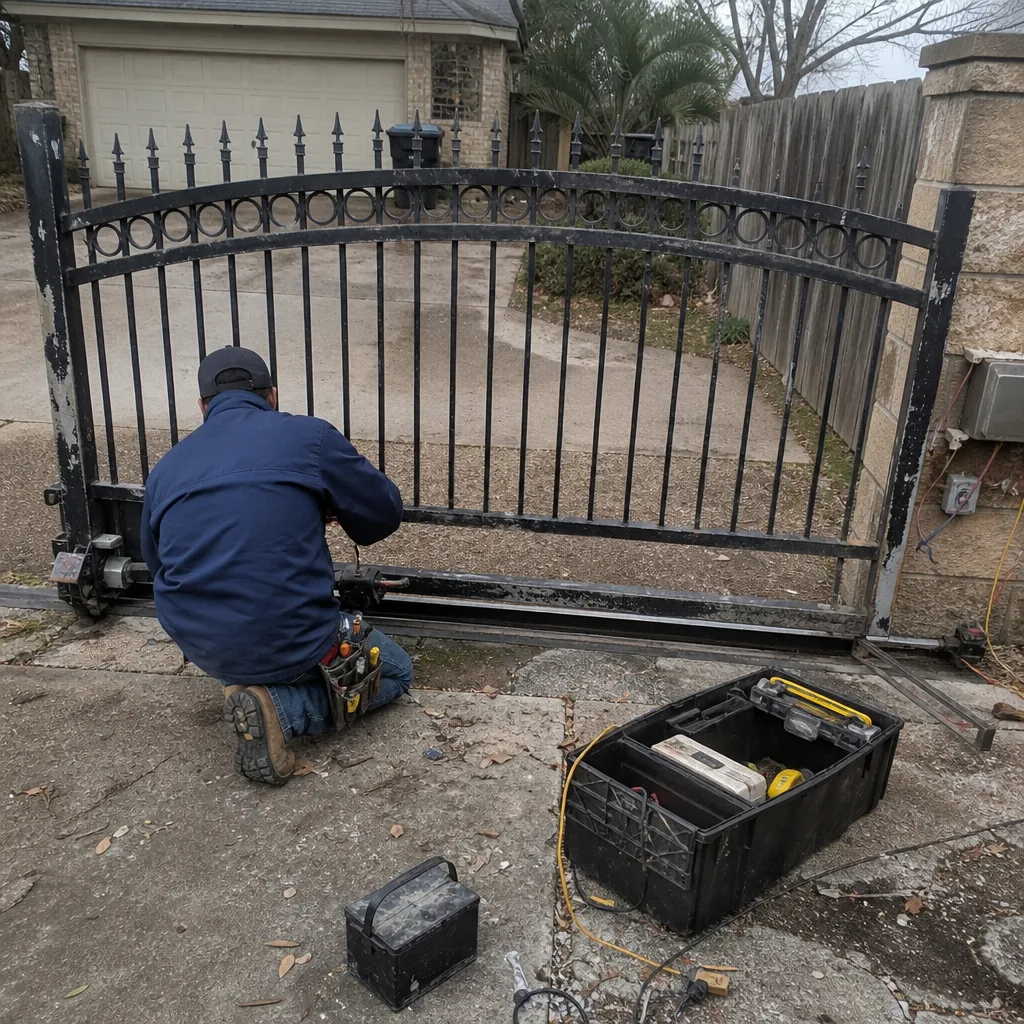 Before
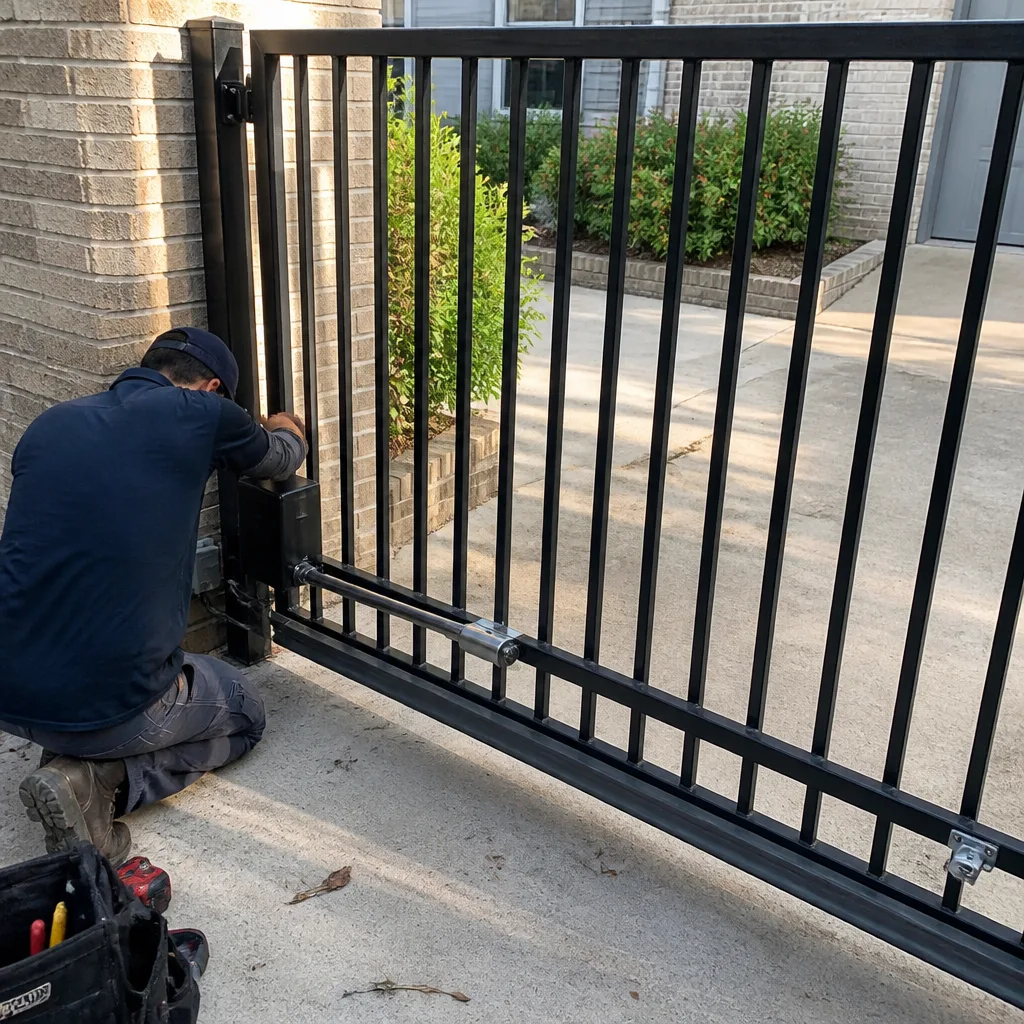 After
After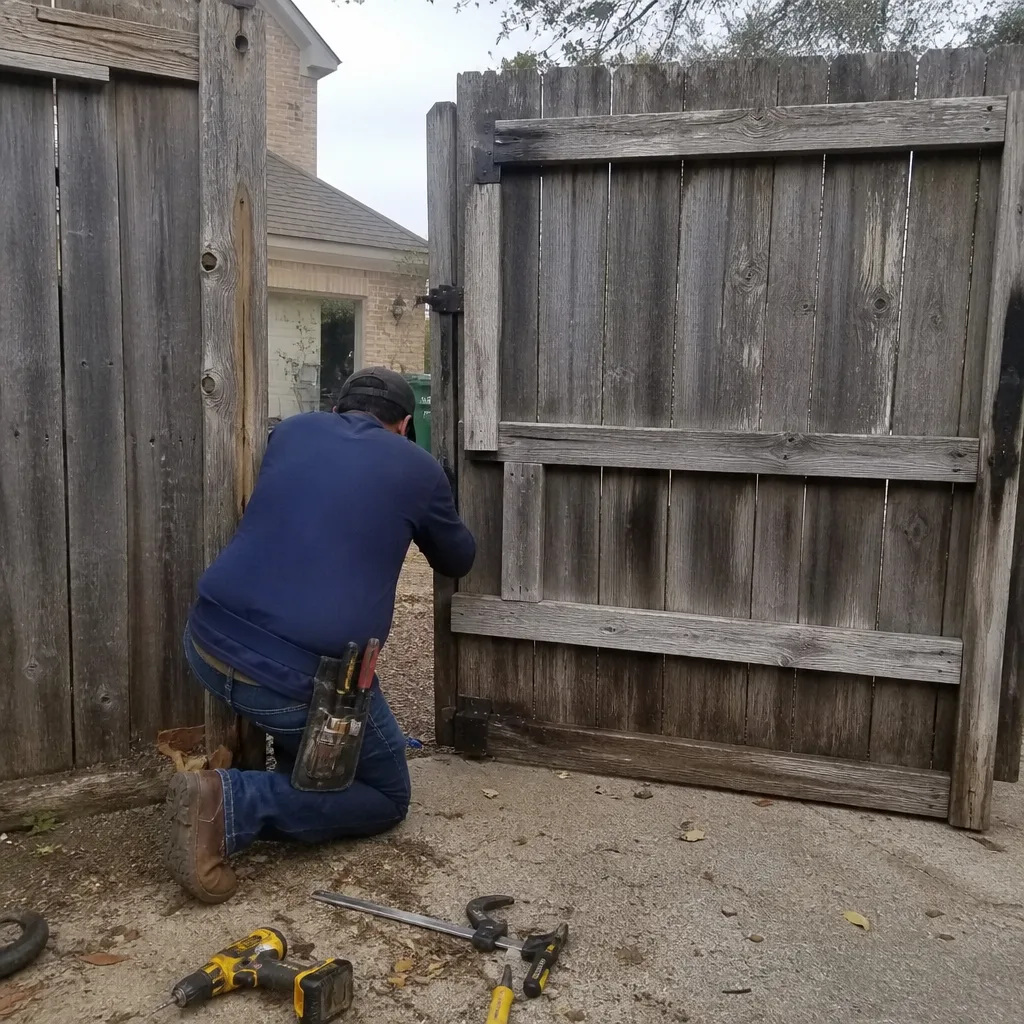 Before
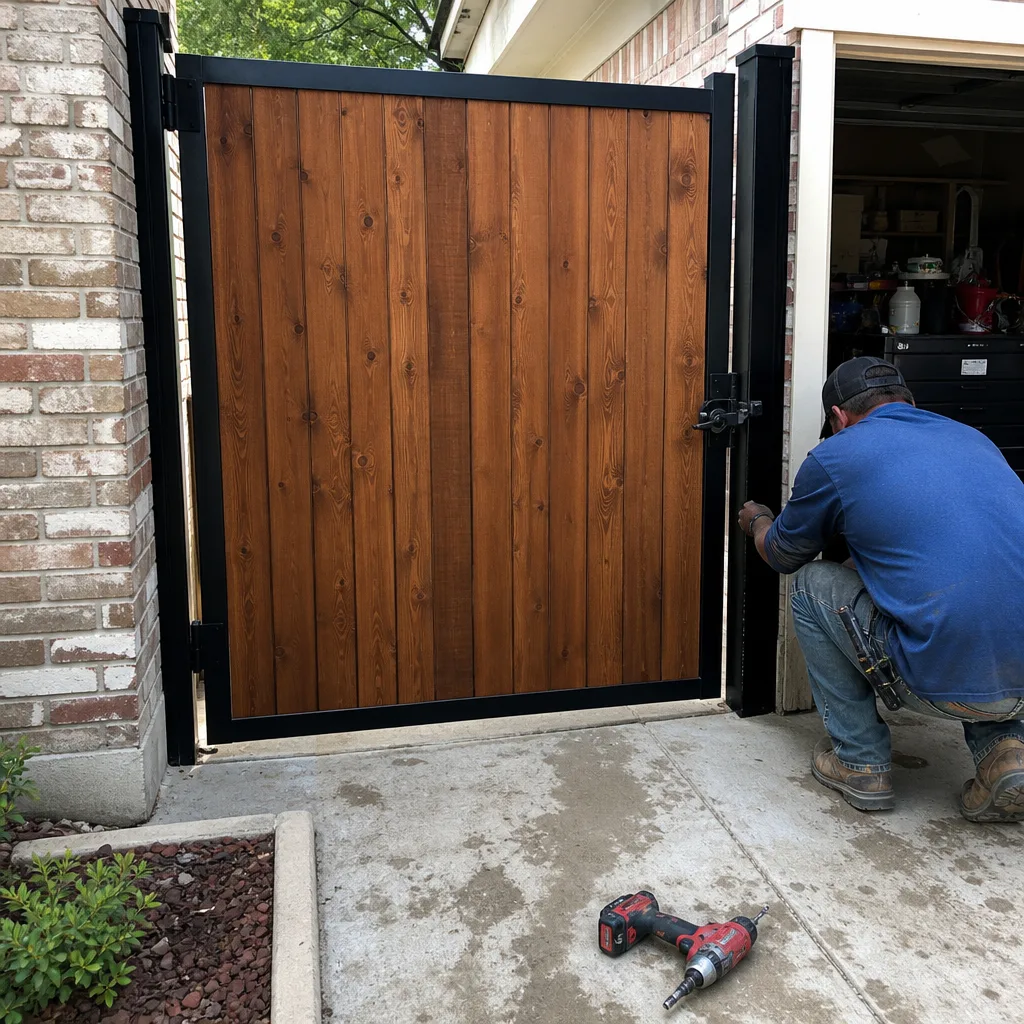 After
After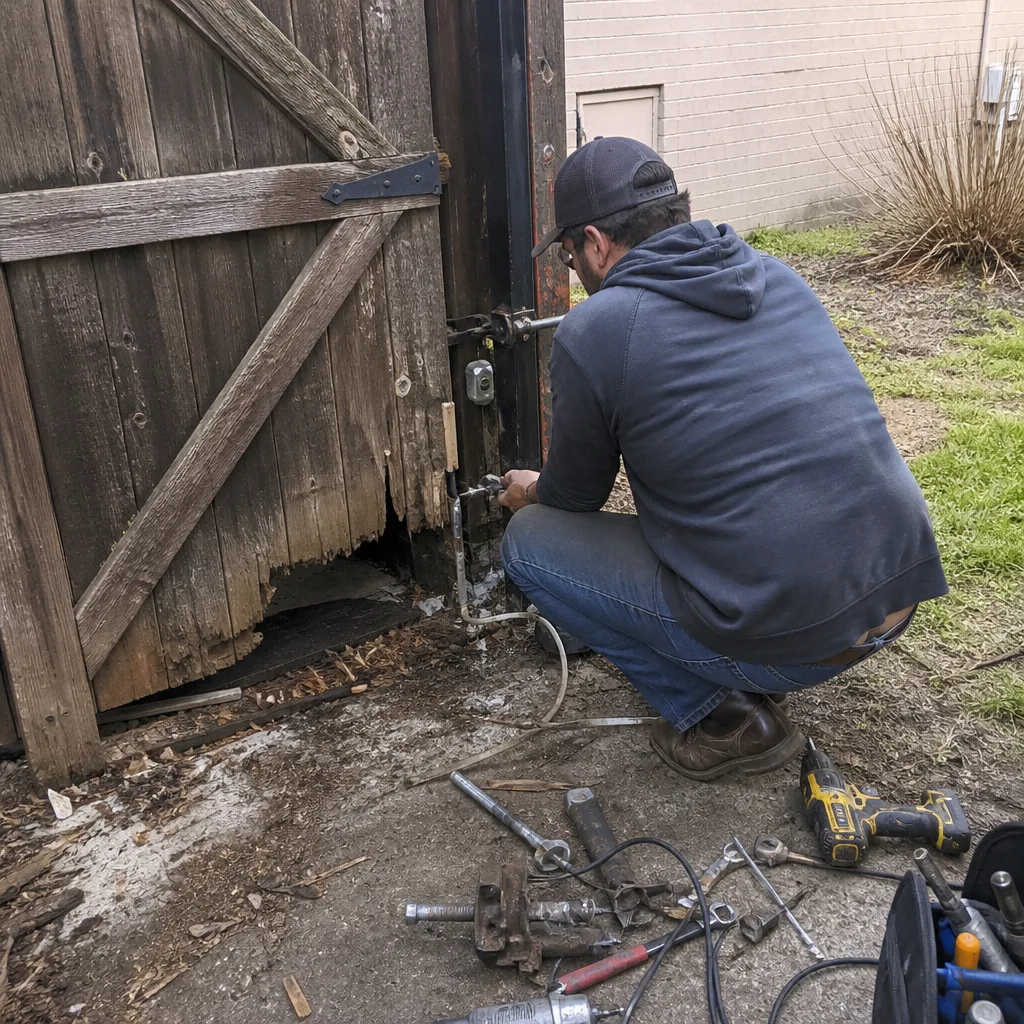 Before
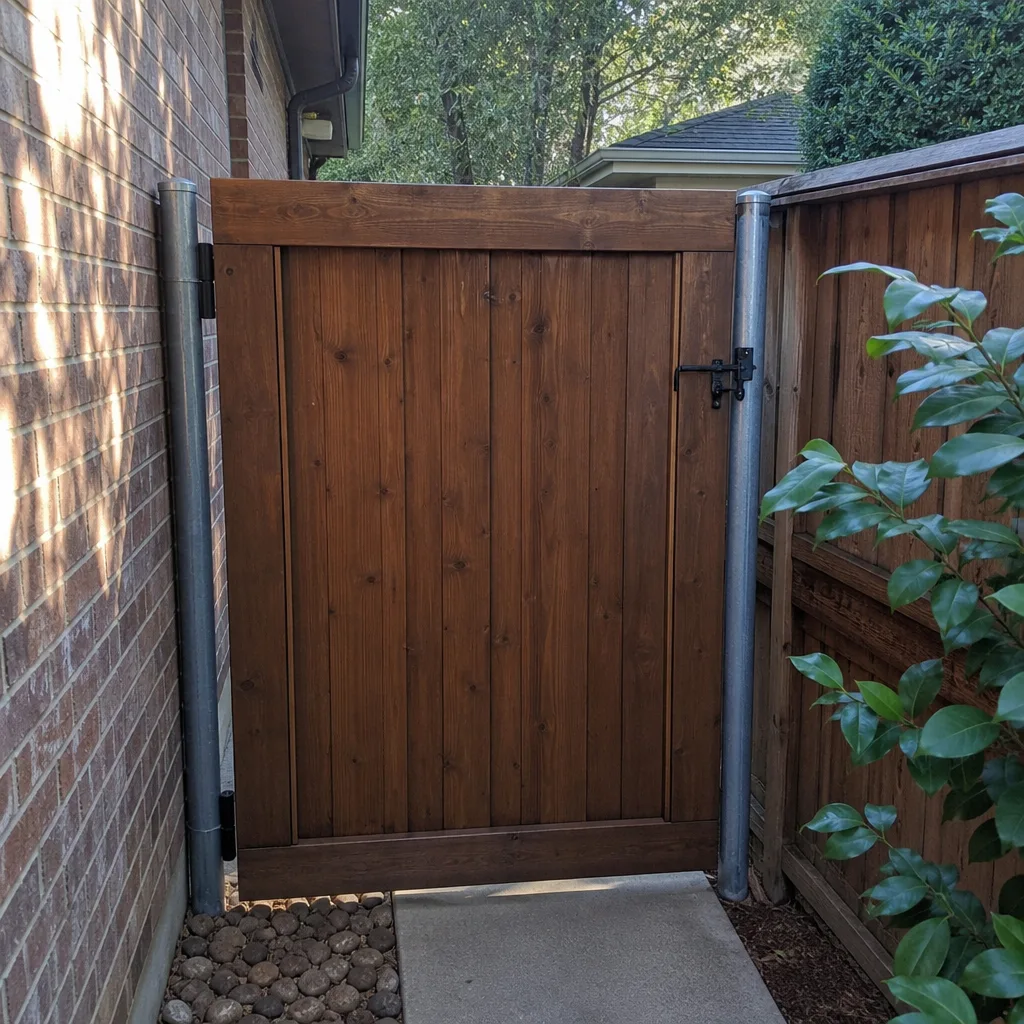 After
After