
Last updated October 16, 2026
 Wrought iron
 Wood & steel frame
 Sliding driveway gates
 LiftMaster operators
Free on-site gate assessment - hinges, posts, and your LiftMaster or Nice gate operator checked before anything is quoted
The assessment is free and the quote is the invoice.
Get your free estimateGate Repair Warning Signs: A Dallas Homeowner’s Reference Guide
Most gate failures in Dallas don’t happen suddenly. They announce themselves weeks or even months in advance, through small changes most homeowners write off as quirks or weather. A gate that “just seems slower than it used to” is not a quirk. It is the most common early sign of a failing capacitor in the operator motor, a $60 – $120 part that, if ignored, takes out the entire control board and turns a minor repair into a $400 – $700 job. This guide walks you through the warning signs that matter, sorted by symptom, so you know what you’re looking at, what it likely means, and how urgently it needs attention. For How to Hire a Gate Repair Contractor in Dallas: A Step-by-Step Guide, see our companion resource.
Quick Answer
The most common gate repair warning signs in Dallas are slow or labored operation, new grinding or clicking sounds, a gate that stops mid-travel, visible lean on the gate posts, and reduced remote range on automatic gates. Each symptom maps to a specific failure point, and most give you 30 to 90 days of lead time before the gate stops working entirely. Catching these early typically means a $100 – $400 repair instead of a $1,500 – $4,000 full replacement.
Styles & brands we work with
Table of Contents
- Sounds Your Gate Shouldn’t Make: Grinding, Clicking, and Humming
- Speed Changes: When a Slow Gate Is a Warning
- Swing Gate Warning Signs: Lean, Sag, and Hinge Wear
- Slide Gate Warning Signs: Track Issues and Roller Failures
- Electrical Warning Signs on Automatic Gates
- Immediate Safety Risks vs. Scheduled Repairs
- Common Mistakes to Avoid
- When to Call a Professional
- Frequently Asked Questions
Sounds Your Gate Shouldn’t Make: Grinding, Clicking, and Humming
A healthy gate operator makes a low, even mechanical sound. Anything sharp, metallic, or irregular is a signal. In our experience across Dallas neighborhoods like Lake Highlands, Preston Hollow, and Casa View, the sound a gate makes is the single most reliable predictor of what’s about to fail. Here’s how to read the three most common sounds.
Grinding almost always means metal-on-metal contact where there shouldn’t be any. On a swing gate, it’s usually a hinge that’s lost lubrication or begun to wear, or a wheel that’s dragging on the driveway. On a slide gate, grinding points to the rollers or the track. If you catch grinding early, a technician can often replace a worn roller assembly for $150 – $300. If you let it run for another two or three months, the damaged roller chews through the track, and now you’re replacing both track sections and rollers at $600 – $1,200.
Clicking is different. A rapid click when you press the remote usually means the operator is getting power but the motor isn’t engaging. In many cases it’s the capacitor, especially on older FAAC and BFT operators that have been running for six or more years. A capacitor swap runs $60 – $120 in parts plus labor. A single click followed by nothing is often a control board relay or a limit switch failure. Either way, clicking is a “call sooner rather than later” sound because electrical failures tend to cascade.
Humming without movement is the most urgent sound on this list. It means the motor is receiving power and trying to run, but something is physically preventing the gate from moving. The motor is working against a stall condition. Every second it hums, it’s building heat and drawing high current. If the gate is jammed, the motor can burn out in minutes. If you hear a hum and the gate isn’t moving, cut power to the operator at the breaker or the manual disconnect, and call a technician. The difference between a humming gate that gets looked at immediately and one that hums for a week is the difference between a $200 jam-clearing job and a $900 – $1,500 operator replacement.
DoorKing, Linear, and Viking-Specific Notes
We work on nine operator brands across Dallas, and some sounds are brand-specific. DoorKing slide operators tend to make a distinct clunk on engagement if the chain tension is off. Linear swing operators often develop an uneven rhythm, a kind of surging sound, when the arm’s internal limit switches start failing. Viking operators, which we see regularly on commercial properties around Dallas, will sometimes emit a continuous faint buzz from the transformer even when idle. If you hear any of these, note which operator you have and mention it when you call. It helps the technician arrive with the right parts.
Speed Changes: When a Slow Gate Is a Warning
Every automatic gate has a normal operating speed. It was set at installation and hasn’t changed unless someone adjusted it. So when a gate that’s opened in twelve seconds for the past five years suddenly takes twenty, something physical has changed. Here are the four most common causes we diagnose in Dallas, in order of likelihood.
- Failing capacitor in the motor. The capacitor provides the starting torque. A weak capacitor means the motor can’t get the gate moving at full speed. This is the $60 – $120 part mentioned earlier. Early replacement protects the control board.
- Low battery or failing transformer in the operator. If the gate runs on a backup battery, a battery that’s no longer holding a full charge will slow the gate noticeably before it fails completely. Dallas heat accelerates battery degradation, so batteries here rarely last the manufacturer’s maximum rated span.
- Increased mechanical resistance. A hinge that’s binding, a wheel bearing going flat, or a track that’s collected North Texas clay and gravel all make the motor work harder. Harder work means slower movement. Cleaning and lubricating or replacing the affected hardware usually restores speed.
- Motor windings beginning to fail. This is the least common but most expensive cause. If the motor is slow to start, slow throughout travel, and slow to stop, and the first three causes have been ruled out, the motor itself is degrading.
The takeaway: a slow gate is almost never “just getting old.” It’s a system under strain, and every week of strain shortens the life of the operator. If you’re noticing a speed change on an automatic gate in Dallas, it’s worth scheduling Gate Repair services before the operator gives out entirely. Most of these diagnoses take a technician under an hour.
Swing Gate Warning Signs: Lean, Sag, and Hinge Wear
Swing gates fail in two distinct ways: the operator fails, or the physical gate fails. The physical failures are the dangerous ones, because they involve mass and gravity. A double swing gate leaf can weigh 300 to 600 pounds. When a hinge fails or a post begins to lean, that weight starts working against the structure.
Post lean is the warning sign to take most seriously. Here’s a simple way to check it yourself. Place a level vertically against the gate post, on the side that carries the hinges. If the bubble is outside the lines, the post is out of plumb. Then measure the gap at the bottom of the gate where the two leaves meet when closed. Write it down. Check it again in thirty days. If the gap has changed by more than a quarter inch, the post is actively moving. In Dallas, this is often caused by soil movement. The clay soil in much of the metro area expands and contracts dramatically with moisture, and over a decade of wet winters and dry summers, a post set in a modest concrete footing can work loose. Gates in East Dallas and Garland, where soil movement is more pronounced, tend to show post lean earlier than gates on the more stable limestone-and-sand soils west of downtown.
Sagging gate leaf is different from post lean. Sag means the post is still plumb but the gate leaf itself is drooping at the latch end. This is almost always hinge wear. The hinge pin has elongated in the barrel, or the hinge bracket has worked loose from the post. A sagging gate scrapes the driveway and puts lateral load on the operator. Replacing worn hinges typically runs $200 – $450 per pair installed. If you catch the sag before it damages the operator’s actuator, that’s the whole repair. If the actuator has been fighting the drag for months, add $300 – $600 for the actuator swap.
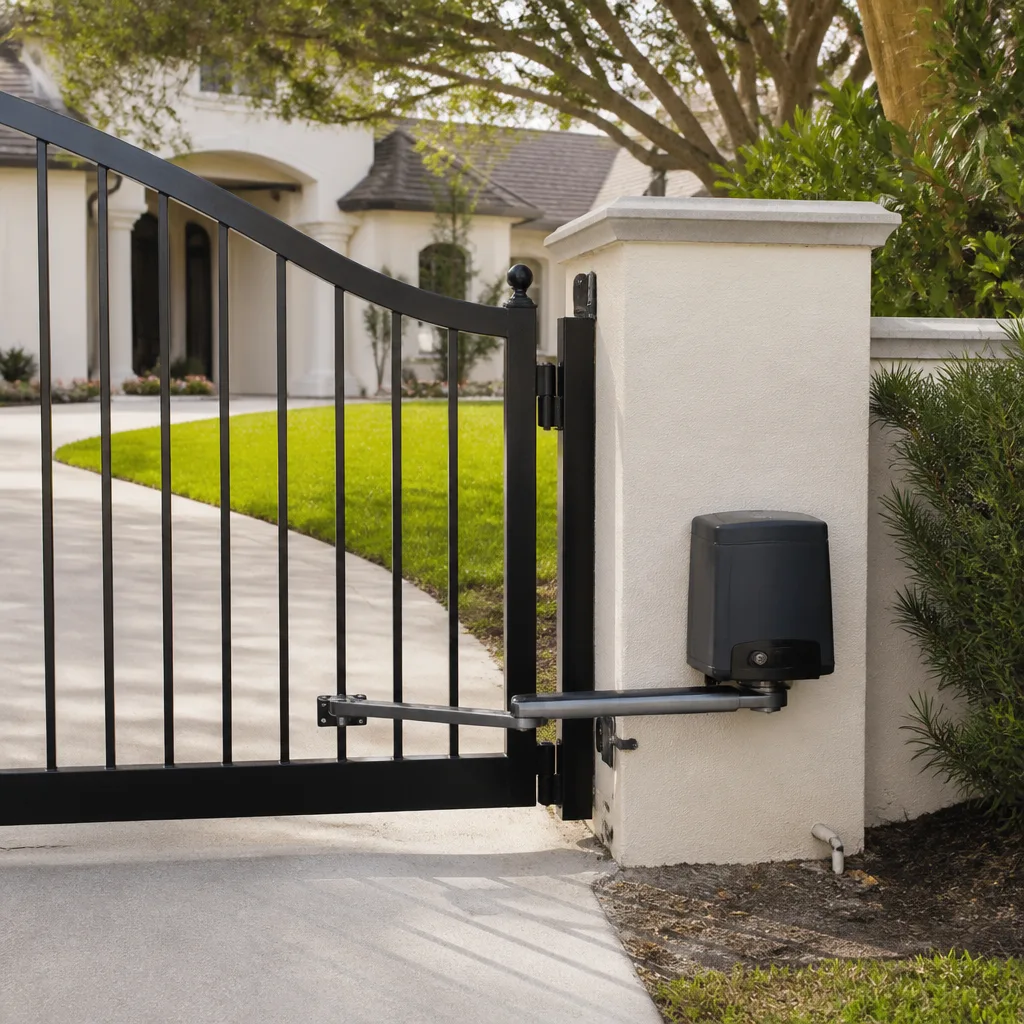
Warning signs specific to swing gate operators: a gate that pauses mid-swing, a gate that bounces or shudders on startup, or an actuator that makes a knocking sound on extension. These point to the actuator, the motorized arm that physically pushes the gate open and closed. Most swing-gate actuator swaps in Dallas run $350 – $750 parts and labor depending on the brand. FAAC and BFT actuators tend to sit at the higher end because of parts cost. Linear and Viking replacements are usually mid-range.
For a fuller breakdown of swing gate work, our Gate Repair in Dallas page covers swing and slide gate repairs, costs, and timelines in more detail.
Slide Gate Warning Signs: Track Issues and Roller Failures
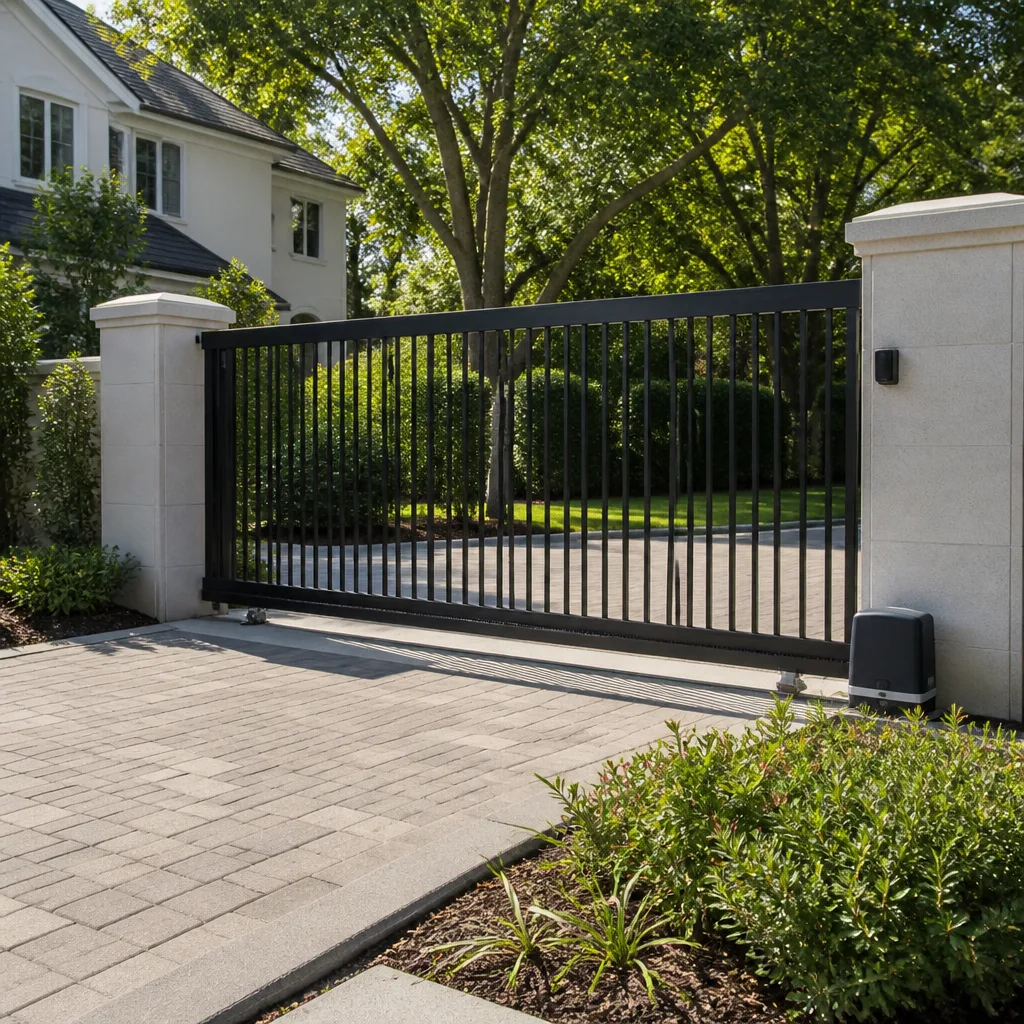
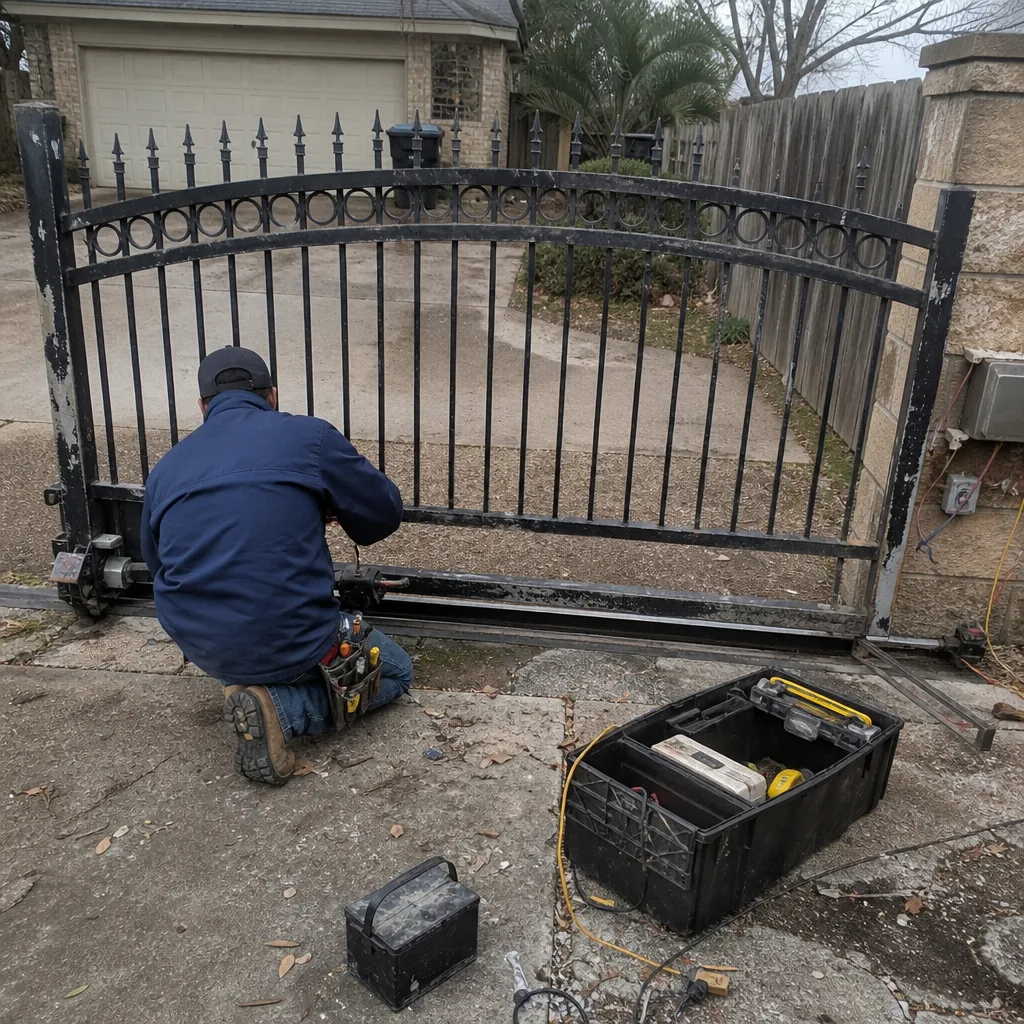
Slide gates fail differently than swing gates. There’s no giant leaf hanging from a hinge; instead, the gate’s entire weight rides on rollers along a track. That design is efficient, but it also concentrates wear into a handful of small parts. In Dallas, slide gates face a particular challenge: wind. A cantilever or track slide gate is effectively a sail. When a strong north wind hits a closed slide gate, the gate flexes laterally, and the rollers take the punishment. Over time, roller bearings wear, the track develops flat spots, and the gate starts to move with a lurching, stuttering motion.
The signature slide gate warning sign is a rhythmic bump or hop as the gate travels. Each bump is a flat-spotted roller passing over a worn section of track. If you watch the gate from the side while it’s moving, you’ll see the bottom of the gate rise slightly at the same point in every cycle. That’s a roller or track problem, and it’s repairable if caught early. A full set of replacement rollers for a residential slide gate runs $150 – $400 installed. A track section replacement, if the track has been chewed through, runs $500 – $1,100.
Chain drive slide gates add another failure point. The chain connects the operator’s drive sprocket to the gate. Chain stretch over time causes a jerky start, because the drive sprocket has to take up slack before the gate actually moves. If you hear a clunk from the operator when the gate starts moving, that’s chain slack. Left alone, a stretched chain eventually jumps the sprocket, and the gate stops dead. Chain tensioning is a quick, inexpensive adjustment. Chain replacement runs $120 – $300 depending on gate size.
Track alignment is the final slide gate warning sign. If the track has shifted out of line, which happens with the same soil movement that leans swing gate posts, the rollers bind against the side of the track instead of riding in the rail. You’ll see fresh metal shavings or bright wear marks on the inside face of the track. That’s metal being ground off every time the gate moves. A track alignment is usually a $200 – $400 job. A new track, needed if the old one is badly worn or bent, is $900 – $1,600 for a residential driveway gate in Dallas.
Electrical Warning Signs on Automatic Gates
Automatic gates run on low-voltage control systems and a main motor circuit. Electrical problems show up in predictable ways, and each one has a fairly specific diagnosis. Here are the four electrical warning signs we see most often on Dallas properties.
Intermittent operation is the most common electrical complaint. The gate opens fine all morning, then refuses to respond at two in the afternoon, or it only works after you press the remote three times. Intermittent behavior usually points to a poor connection or a heat-related failure. The Dallas summer is hard on outdoor electronics. Photocells, the safety sensors mounted near the gate opening, fail intermittently in direct sun when their internal components overheat. A control board with a cracked solder joint will also behave erratically as the board expands and contracts with temperature. Intermittent problems are hard for a homeowner to pin down, but they’re easy for a technician with a multimeter and a full day of direct sun to reproduce.
Error codes are the operator trying to tell you what’s wrong. Every major brand, including FAAC, BFT, Linear, and Viking, has a diagnostic LED or a small display that flashes a number or letter sequence when something fails. The code is only useful if you know which operator you have and what the code means. Write down the exact sequence, note whether it’s steady or blinking, and include that when you call a gate repair company. It often lets the technician diagnose over the phone and bring the right part on the first visit. Our Electric Gate Repair in Dallas page walks through how we handle diagnostics on all nine brands we service.
Remote range reduction means your remote only works when you’re close to the gate, or you have to press the button multiple times from the street. First check the remote battery, which is the cause about half the time. If a fresh battery doesn’t fix it, the receiver antenna or the receiver board on the operator is the likely culprit. On a Linear operator, a failing receiver often reduces range gradually over weeks. On a Viking, the antenna wire sometimes loosens or corrodes at the board connection. A receiver replacement runs $150 – $350 for most residential operators in Dallas.
A gate that opens but won’t close, or closes but won’t open, is frequently a limit switch or photocell issue rather than a motor failure. The limit switches tell the operator when to stop at each end of travel. If a limit switch fails, the gate doesn’t know it’s reached the end, and the control board refuses to run the motor in the opposite direction for safety. Photocells, the safety beams mounted low on either side of the gate opening, will also stop a gate from closing if they’re misaligned or blocked. A misaligned photocell is a ten-minute fix and often doesn’t even need a service call. A failed limit switch is a $120 – $250 repair on most operators.
Immediate Safety Risks vs. Scheduled Repairs
Not every warning sign needs an emergency call. Some can wait a few days or even a week without meaningful risk. Others need to be addressed today. Here’s how to sort what you’re seeing.
Call immediately:
- A gate that falls, drops suddenly, or comes off its track
- A swing gate with active post lean that’s visibly moving or has changed more than a quarter inch in thirty days
- A humming operator with the gate not moving
- Any gate that reverses direction on its own or doesn’t stop when it meets resistance
- Sparks, a burning smell, or a warm operator housing
- A gate that won’t stay closed, because a gate that can’t close is a security failure
These are the scenarios where the gate itself can injure someone, damage a vehicle, or burn out an expensive operator. The safety edge and photocell systems on automatic gates are designed to prevent entrapment, but a gate that’s failing structurally can bypass those protections entirely. A 400-pound swing gate leaf coming off a broken hinge is a serious hazard to anyone nearby. If you see any of these, cut power to the operator and call a professional.
Can wait for a scheduled appointment:
- A gate that’s slightly slower than normal but still operates
- Light grinding that’s new but not severe
- Remote range reduction
- An error code that clears when you cycle power
- Cosmetic rust without structural compromise
- Minor sag that isn’t yet scraping the driveway
These are real warnings and they should be addressed sooner rather than later, but they don’t create an immediate safety hazard. A scheduled appointment, usually within a few days, is appropriate. The 30-to-90-day lead time we mentioned earlier applies here: you have time to book a visit at a normal rate rather than paying emergency dispatch pricing.
If you’re building a new gate or replacing an old one entirely, our Gate Installation in Dallas page covers what a full installation includes, from the concrete work to the operator wiring to the final safety check.
Common Mistakes to Avoid
- Ignoring a slow gate until it stops. A slow gate is a diagnostic goldmine. Once it stops entirely, the failure has usually progressed from a simple part to a cascading one. The homeowner who calls about a slow gate usually spends $200 – $400. The one who calls about a dead gate often spends $800 – $1,500.
- Lubricating without diagnosing. Spraying a silicone lubricant on a grinding hinge quiets the sound without fixing the wear. The gate runs quieter for a few weeks, the homeowner stops worrying, and the hinge finishes failing quietly. Grinding means something is worn, not just dry. Loud grinding plus silent progress is still progress.
- Replacing the operator when the gate is the problem. We see this a lot in Dallas. A swing gate sags, the motor works harder, the motor burns out, and the homeowner replaces the motor. Then the new motor burns out a year later against the same sagging gate. The gate structure has to be right before the operator has a chance.
- Ignoring error codes and resetting the breaker. Cycling power clears some error codes temporarily, but the underlying fault remains. Each reset masks the problem. If you have to reset your operator breaker more than twice in a month, there’s a real electrical issue that needs a diagnostic visit.
- Letting post lean ride through a Dallas wet season. The clay soil expansion in a wet spring can move a leaning post from “noticeable” to “failed” in a single season. What was a $400 post-stabilization job in March can become a $2,500 post-replacement and concrete repour in June.
- Assuming a new remote will fix range problems. If you’ve replaced the remote battery and the range is still short, the receiver is failing. Buying a new remote doesn’t help a broken receiver. The receiver replacement is usually the cheaper fix anyway.
- Working on a powered gate without disconnecting it. An automatic gate can move without warning if a limit switch shorts or a control board glitches. Always cut power at the breaker and use the manual disconnect before doing any work on or near an automatic gate. Even then, a gate with stored tension or a counterbalance can move unexpectedly. For anything beyond a visual inspection, call a trained technician.
When to Call a Professional
Call a professional when the warning sign involves the operator, the electrical system, the hinges, the track, or the posts. That covers almost everything on this page, and that’s the point. Gates are heavy, powered equipment. The mechanical and electrical systems interact, and the safety systems exist because people have been hurt by gates that move unexpectedly or fail structurally. If you’ve read any warning sign on this page and recognized it in your own gate, that’s the cue. Portcullis Gate Repair Dallas offers free estimates on gate work throughout the metro area. Call (325) 225-5440 and a live person answers, 24 hours a day. We’ll give you a written price before any work starts, on every job, no exceptions.
Every repair we make carries the 365-Day Done Right Promise: a written guarantee stamped on the invoice, and if the repair fails within that year, we come back and fix it at no charge. That’s the Kingswell Guarantee, and it’s the same standard we’ve held since 2008.
Frequently Asked Questions
Most residential gate repairs in Dallas run between $150 and $750. Small electrical fixes like a capacitor replacement run $60 – $120 for the part plus a service call fee. Hinge replacements typically run $200 – $450 per pair installed. Slide gate roller replacement runs $150 – $400. Full operator replacement runs $900 – $1,500 for most residential brands, plus installation. Every quote from Portcullis Gate Repair Dallas is a written quote agreed before any work begins, so the price on the quote is the price on the invoice. Call (325) 225-5440 for an exact price on your gate.
Yes. Portcullis Gate Repair Dallas answers calls 24 hours a day, 7 days a week, and we schedule same-day emergency service for gate failures that block a driveway or leave a property unsecured. A live person answers the phone, not a voicemail tree. Call (325) 225-5440 and tell us what the gate is doing, and we’ll give you a real arrival window before we dispatch.
A humming gate that doesn’t move means the motor is receiving power but the gate is mechanically stuck or the capacitor has failed. It’s an urgent condition because the motor is drawing high current against a stall, and it can burn out in minutes. Cut power to the operator immediately and call for service. If the jam is cleared quickly, the repair is often under $300. If the motor burns out, it’s a $900 – $1,500 operator replacement.
Intermittent operation on an automatic gate in Dallas is usually caused by a heat-related electrical failure, a loose connection, or a failing photocell. The extreme heat and direct sun on a Dallas summer afternoon push marginal components over the edge. A technician with a multimeter can usually reproduce the failure and pinpoint the part within an hour. Call (325) 225-5440 to schedule a diagnostic visit with a written price before any repair work starts.
Yes. A full gate installation in Dallas includes the operator, the wiring and power connection, the safety edges and photocells, and the programming. We don’t leave a gate with safety equipment disconnected or a power run done to code minimum. Every installation includes a written price before work begins and the Kingswell Guarantee on the whole job.
Our technicians are trained on nine major gate-operator brands: LiftMaster, FAAC, BFT, Linear, Viking, Ghost Controls, DoorKing, Elite, and Mighty Mule. That matters because the technician who arrives already knows the specific system on your property. FAAC and BFT operators are common on Dallas swing gates, Linear and DoorKing on slide gates, and Viking on commercial properties. We don’t send a generalist to learn the system at your expense.
The Bottom Line
Gate failures give warning. The slow gate, the new grinding sound, the gradual post lean, the shrinking remote range: these are all signals with specific causes and predictable costs. The difference between a $200 capacitor replacement and a $1,500 control board and operator failure is usually a few weeks of attention. In Dallas, where the heat, the clay soil movement, and the wind work against gates year-round, watching for these signs is part of owning the property. If you’ve spotted one of them, write down what you’re seeing, check our more guides & resources, and call (325) 225-5440. A live person answers. The estimate is free. The price goes in writing before any work starts. That’s how we’ve done it in Dallas since 2008, and it’s how every Kingswell company does it, on every job.
Written by Dean Prescott, Owner at Portcullis Gate Repair Dallas, serving Dallas since 2008.
See the difference
 Before
 After
After Before
 After
After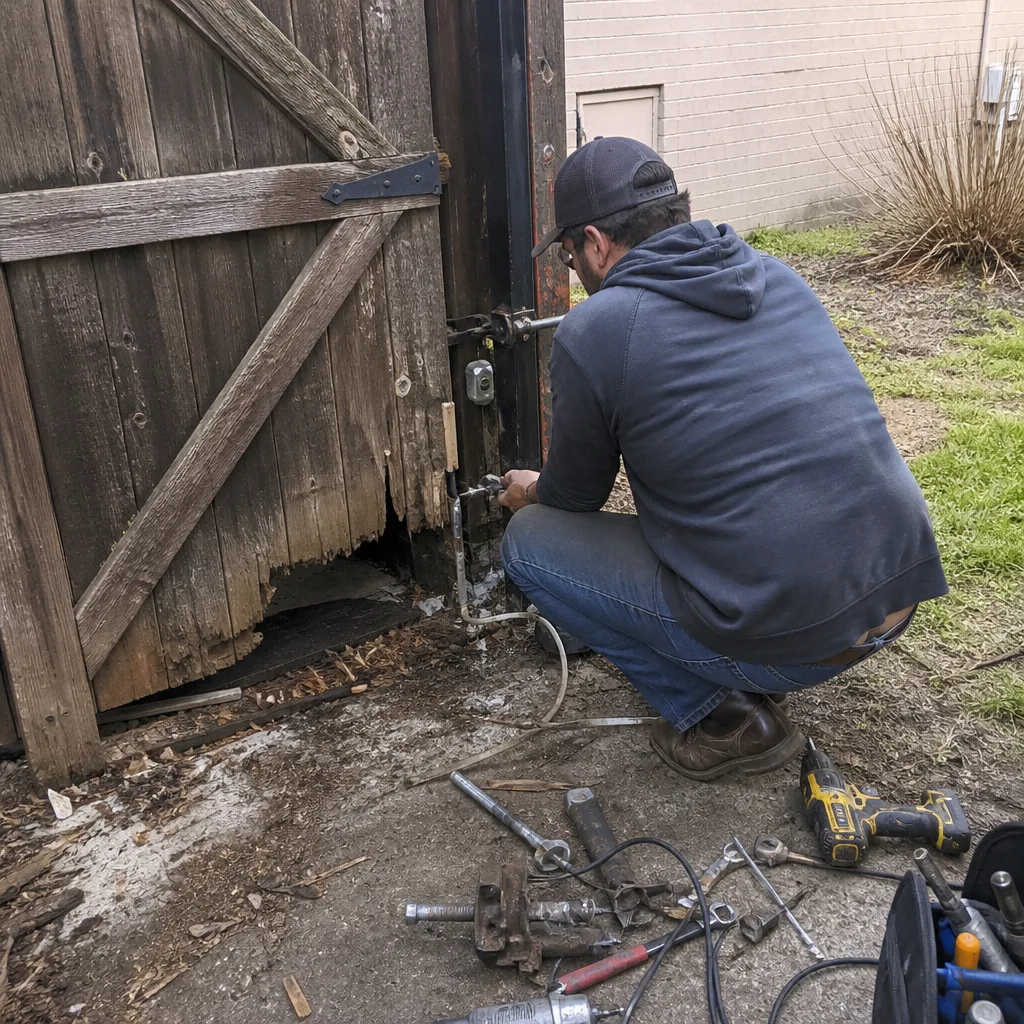 Before
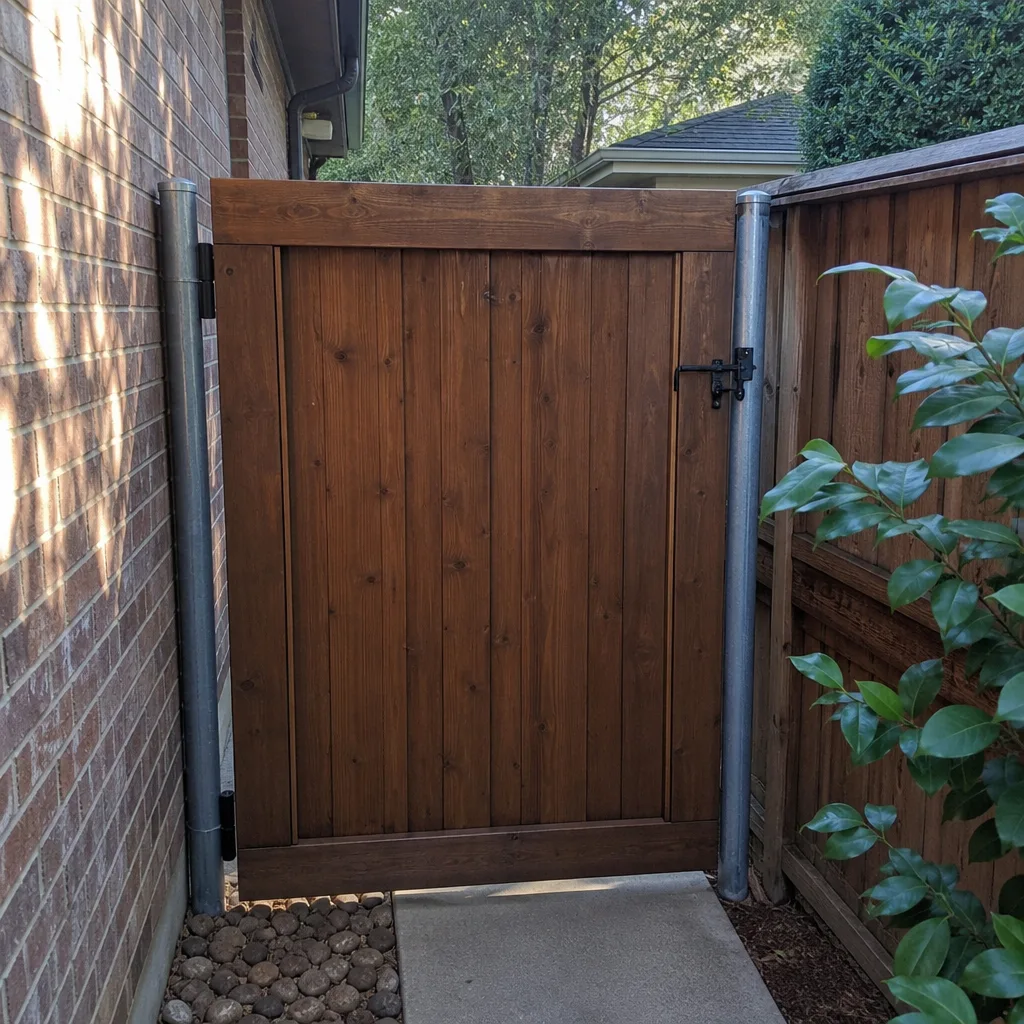 After
After