
Last updated October 16, 2026
 Wrought iron
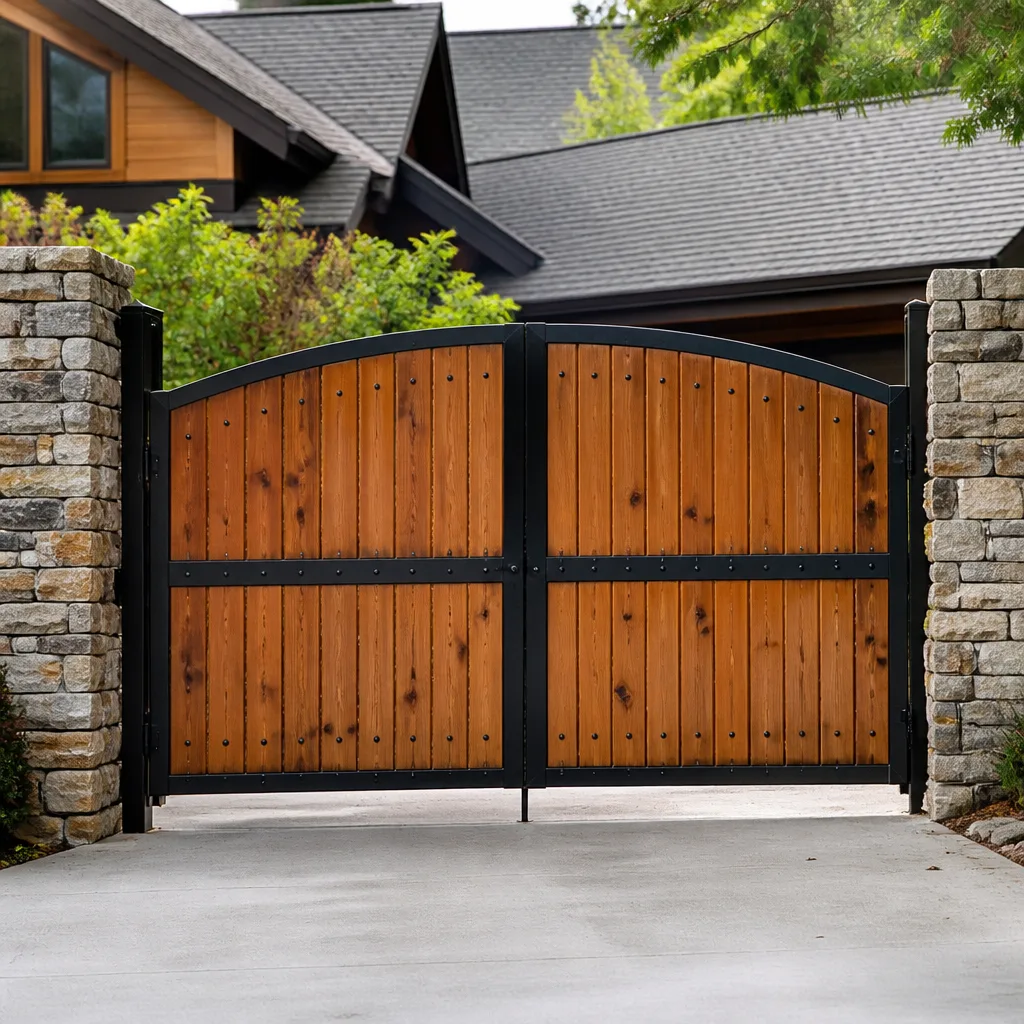 Wood & steel frame
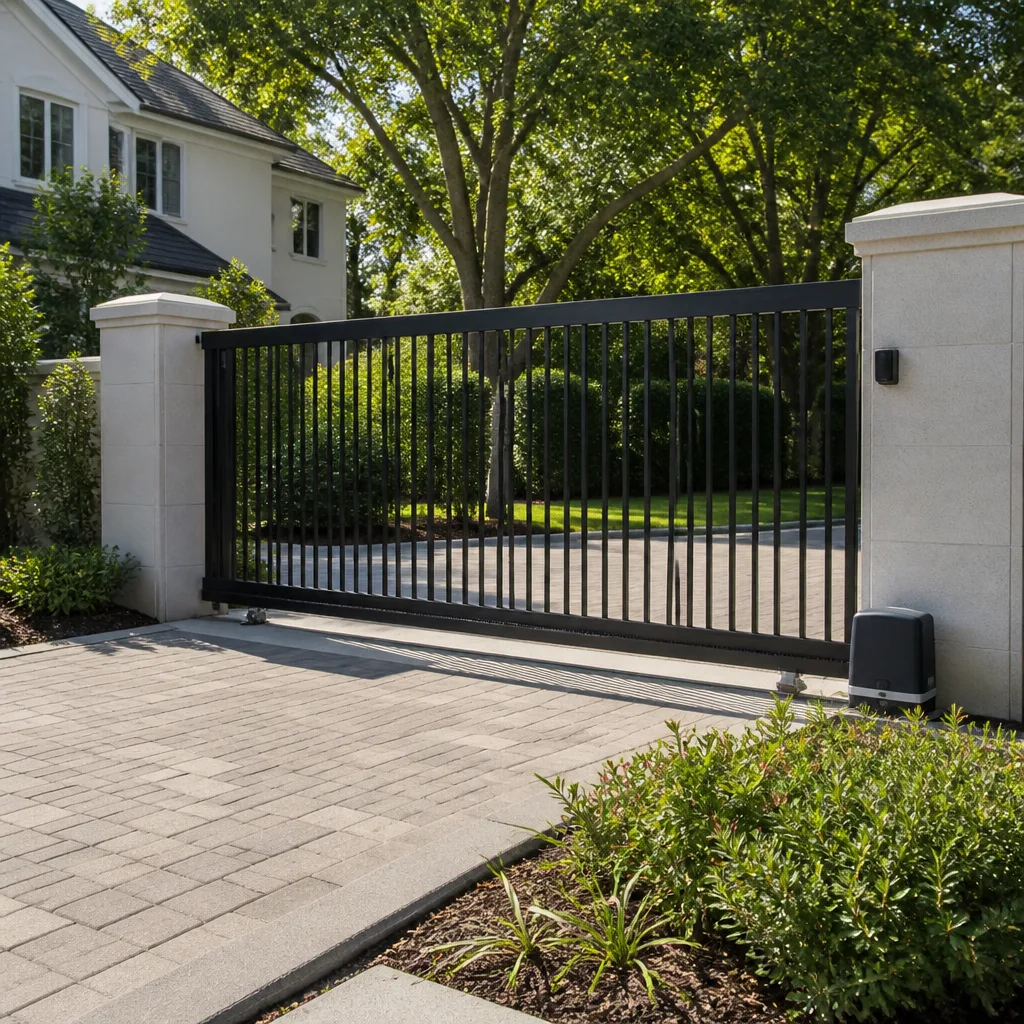 Sliding driveway gates
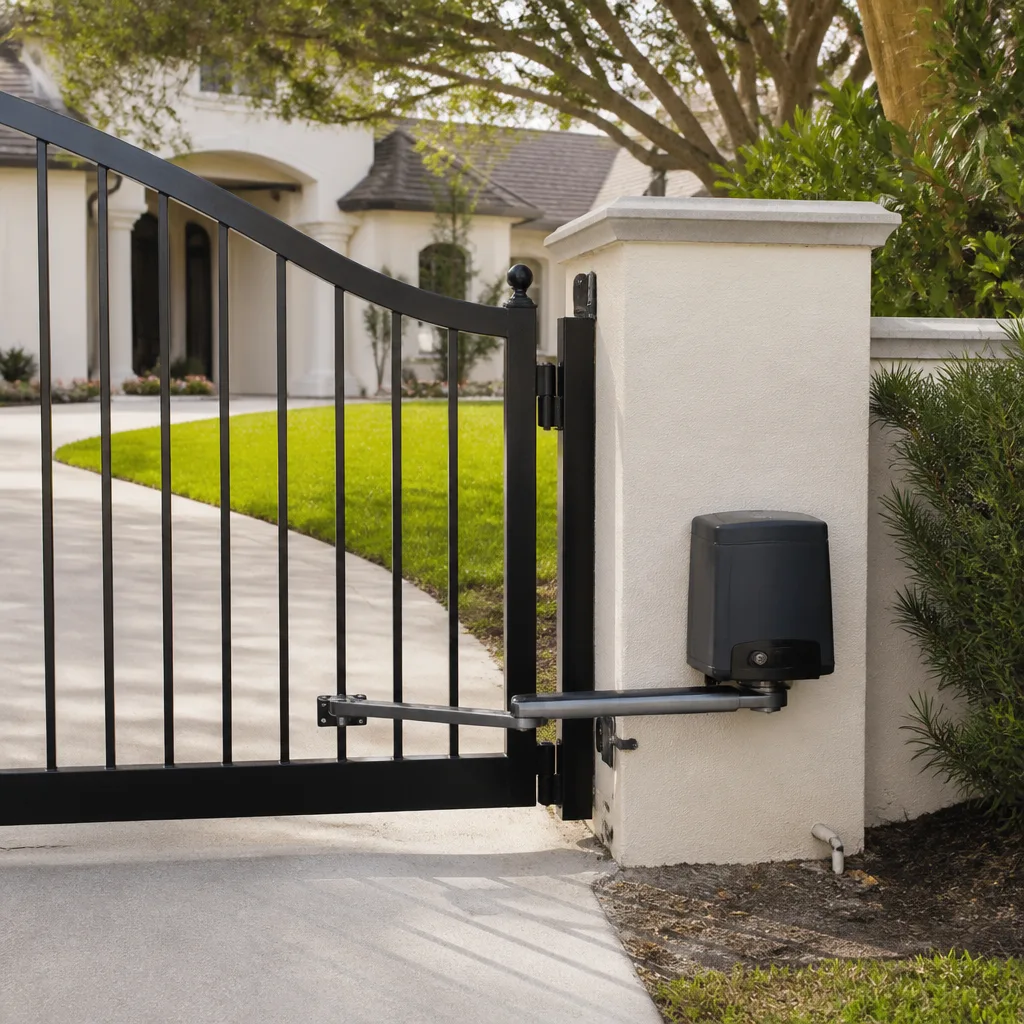 LiftMaster operators
Free on-site gate assessment - hinges, posts, and your LiftMaster or Nice gate operator checked before anything is quoted
The assessment is free and the quote is the invoice.
Get your free estimateSeasonal Gate Repair Care for Dallas: Year-Round Homeowner’s Guide
February is Dallas’s most dangerous month for gate hardware, and it catches homeowners off guard every year. Not because it’s the coldest month, but because a single ice event after months of dry heat can crack a pneumatic post latch, seize a roller track, or trigger a low-battery fault on an operator that tested fine back in December. Most Dallas gate failures aren’t random. They follow a seasonal pattern that’s predictable once you know what to watch for, and this guide walks you through the full calendar so you can do the right work in the right month and avoid the phone call you don’t want to make at 6 a.m. on a frozen Tuesday.
Styles & brands we work with
Quick Answer
Seasonal gate care in Dallas means scheduling preventive maintenance twice a year, once in the October-November window before winter temperature swings and once in March-April after spring storms. The highest-value work is inspecting rollers, hinges, and operator batteries during those shoulder seasons, because repairs done then typically run half to two-thirds the cost of emergency work after a freeze or a 105-degree afternoon has already done the damage. A homeowner who spends 45 minutes each spring and fall on a walkaround will avoid most unplanned gate failures in Dallas.
Table of Contents
- Why Dallas Has Two Punishing Seasons, Not Four
- The October-November Window: Highest-Value Maintenance in Dallas
- Preparing an Automatic Gate Operator for a Texas Ice Event
- Summer Heat: UV Degradation, Grease Liquefaction, and Thermal Binding
- Post-Storm Inspection Checklist for Dallas Hail and High-Wind Events
- Shoulder-Season Repairs: Cheaper to Do Now, Expensive to Ignore
- The Dallas Gate Maintenance Calendar: Month by Month
- Common Mistakes to Avoid
- When to Call a Professional
- Frequently Asked Questions
- The Bottom Line
Why Dallas Has Two Punishing Seasons, Not Four
Dallas has a climate that’s rough on outdoor hardware in ways a lot of national gate advice simply misses. This is not a mild, consistent environment like coastal California. We get summer stretches where the afternoon temperature sits above 100 degrees for days at a time, and we get winter nights in the teens with freezing rain, sometimes in the same year. What we don’t get is a long, gentle spring or a crisp, predictable fall. Those transition seasons exist, but they’re short. That compression of seasons is exactly what beats up gate hardware.
Steel expands when it heats and contracts when it cools. Every gate in Dallas goes through that cycle hundreds of times a year. The damage doesn’t come from a single expansion or contraction. It comes from the cumulative stress of thousands of small movements, plus the specific failures that happen when heat and ice hit components that aren’t designed to handle both extremes. A powder-coated steel gate in Dallas looks different after five years than the same gate in Portland or Atlanta would. The finish checks, the roller bearings dry out, and the operator control board develops hairline solder cracks from repeated thermal cycling.
So the right way to think about gate repair in Dallas is not in terms of four equal seasons. It’s in terms of two punishing periods, summer and late-winter freeze events, separated by two short windows where preventive work actually gets done. Miss those windows and you’re working reactively, which is always more expensive.
The October-November Window: Highest-Value Maintenance in Dallas
If you do one gate maintenance session a year, do it between mid-October and Thanksgiving. This is the highest-value window in Dallas for a simple reason: it’s the last stretch of reliably dry, temperate weather before the freeze-risk months, and it comes after the brutal summer that has already stressed every moving part on the gate. The gate has just survived its hardest season, and it’s about to face its second-hardest. Working on it in late October means the technician can adjust, lubricate, and test everything while the metal is at a neutral temperature, which gives you the honest read on clearances and alignment.
In our experience, a gate serviced in October enters winter with enough margin to handle the contraction of a cold snap without binding. A gate that skips October service and gets hit by a February ice event often fails in a way that costs double, because the failure usually bends or cracks something rather than just wearing it down. Here’s what the October-November visit should include:
- Roller and hinge inspection: Check for flat spots on rollers, worn hinge pins, and any slop in the gate’s swing or slide path. Replace anything marginal now, before cold weather makes brittle metal snap.
- Operator battery test: Load-test the backup batteries for the gate operator. A battery that reads 13.8 volts on a trickle charge can still collapse under load when the temperature drops. October is when you find out.
- Lubrication with the right product: Dallas summer heat thins out light lubricants. Late October is when you switch to a cold-rated grease that won’t stiffen into paste when February arrives.
- Limit switch and safety loop adjustment: The gate’s travel limits and the vehicle-detection loop sensitivity both drift with temperature. Recalibrating in mild October weather gives the widest safe operating range for both seasons.
- Welded joint and post inspection: Look for hairline cracks at weld points, especially on cantilever slide gates where the frame carries frequent load. Hairline cracks in October become full breaks in February.
The October-November service is also the smartest time to book a full gate installation in Dallas if you’re replacing rather than repairing. Installation teams have more scheduling flexibility in the shoulder season, the ground is still workable for post footings, and the new gate gets its first months in mild weather before facing its first summer.
Preparing an Automatic Gate Operator for a Texas Ice Event
Texas ice events are different from a Minnesota winter. In Minnesota it gets cold and stays cold, and everyone’s hardware is built and maintained for that reality. In Dallas a freeze often arrives as rain, then the temperature drops below freezing in a few hours, and everything with water in it or on it locks up. Gate operators fail in these events for three reasons: the battery gives up under cold load, the manual release is frozen or seized and nobody can disengage the operator, or the gate itself is frozen to the ground or the post. All three are preventable in the October-November window.
Here’s the step-by-step preparation sequence we recommend for every automatic gate operator in Dallas before the first freeze of the season:
- Load-test the backup battery, not just its resting voltage. Put a real load on the battery for 10 seconds and watch the voltage sag. If it drops below 12.0 volts under load on a 12-volt system, replace it now. A $75 battery in October prevents a $325 service call on a frozen morning when the operator won’t respond.
- Verify the manual release works smoothly, then lubricate it. Every automatic operator has a manual release, usually a key, a pull cord, or a lever that disconnects the drive so you can push the gate by hand. If you can’t operate it quickly and without tools, you need to fix that before an ice event, because that’s exactly when you’ll need it.
- Confirm the float charging circuit is actually floating. The operator’s control board should maintain the backup battery at a float voltage, typically 13.5 to 13.8 volts for a 12-volt system. If the board isn’t charging correctly, the battery dies silently and you find out in the cold.
- Adjust the force settings down for cold-weather operation. Many operators have adjustable obstruction sensitivity. A gate that barely needed any force in October will need more force in February as grease thickens and metal contracts. Set the limits in November so the winter gate still opens without tripping the obstruction sensor.
- Clear the gate path of standing water and trim anything that drips. Water that pools at the base of a swing gate will freeze and lock the gate to the ground. Water dripping from an overhanging branch onto a slide track freezes into a rail of ice. Both are five-minute fixes in November and five-hour problems in February.
For operators like LiftMaster, FAAC, and BFT, which are common in Dallas’s gated communities, the same principles apply. The specific manual-release mechanism varies by brand, but every one of them needs to be tested before the freeze, not during it. And if you’re not comfortable opening the operator housing and testing a battery under load, an electric gate repair in Dallas technician can do the whole pre-winter sequence in under an hour.
Summer Heat: UV Degradation, Grease Liquefaction, and Thermal Binding
Summer is the season that quietly kills gate hardware in Dallas. It doesn’t announce itself with an ice storm and a gate that won’t move. It does its damage slowly over June, July, and August, and the failures show up as a gate that binds at 3 p.m., an operator that trips its thermal cutoff, or a control board that stops responding after the hottest week of the year. Here’s what’s actually happening to the gate in Dallas summer heat:
UV degradation of control boards and plastic components. The sun in Dallas is intense enough to break down the plastic housings, keypads, and wire insulation on gate equipment. A control board that sits behind a clear plastic cover will degrade from UV exposure faster than the same board in a shaded location. We see boards with cracked solder joints and brittle wire insulation that trace back to years of afternoon sun. The fix is usually shade or a replacement housing, not just a new board.
Grease liquefaction in rollers and hinges. Most gate lubricants are rated for a maximum operating temperature. In Dallas, the surface of a dark metal gate can exceed 140 degrees on a summer afternoon, which is beyond the rating of most general-purpose greases. The grease thins, runs out of the bearing, and leaves the roller running dry. The gate still works, but the roller wears flat spots, and by September the gate has a wobble or a grind that was not there in May.
Thermal expansion causing gate-to-post binding. A 16-foot steel gate installed with a quarter-inch clearance in cool weather can grow enough on a 105-degree day to kiss the post. If it’s a swing gate, it scrapes. If it’s a slide gate, it drags. The operator works harder, draws more current, and trips its thermal overload. Homeowners call us in August complaining the gate “only opens halfway and then stops” and that is almost always thermal expansion binding, not a motor failure. The cure is re-setting the gate’s clearance in the heat of the day, not at 8 a.m. when everything is still cool and contracted.
The summer survival strategy for Dallas gates is simple: use a high-temperature grease rated past 150 degrees, keep the operator housing shaded, and if the gate starts binding only in the afternoon heat, have the clearances adjusted at the ambient temperature where the problem actually occurs. A service call scheduled for 2 p.m. in summer is a legitimate tactical decision.
Post-Storm Inspection Checklist for Dallas Hail and High-Wind Events
Dallas spring is storm season. From March through May we get the hail, the high straight-line winds, and the occasional tornado-warned afternoon. Automatic gates, especially tall ornamental steel gates, act like sails in high wind. A 70-mile-per-hour gust hitting a 200-pound gate panel transfers enormous force into the hinges, the post mounts, and the operator arm. After the storm passes, the gate often looks fine from a distance and is actually damaged up close. Here’s the inspection checklist to run after every Dallas hail or high-wind event:
- Check the gate’s closed position alignment. High wind can torque the gate frame slightly, which changes the closed alignment enough that the latch no longer engages or the lock plate misses. Open and close the gate manually and watch how it seats.
- Inspect hinge and post welds for fresh cracks. Wind fatigue most often shows up as cracked welds at the hinge-side post for swing gates, and at the tail roller bracket for slide gates. Fresh cracks look like a thin dark line through the paint or powder coat.
- Test the operator through a full cycle. Run the gate open and closed once and listen. After a storm, a gate that opens but strains on closing, or makes a new clicking or popping noise, has something shifted out of alignment that the operator is fighting.
- Look for hail damage on the operator housing and keypad. Hail in Dallas can be golf-ball sized. A direct hit on a plastic operator cover, keypad, or the photo-eye lens can crack it without leaving any other sign. Cracked covers let water in during the next storm.
- Verify the safety loops and photo-eyes still respond. Hail and wind-driven debris can shift the photo-eye mounting bracket or knock the vehicle-detection loop out of tune. Put something metal in the loop’s detection field and confirm the gate holds or reopens.
- Check the gate’s ground clearance across its full travel. Stormwater can erode, settle, or shift the ground under a gate’s travel path. A gate that cleared fine before the storm can drag or scrape after heavy rain changes the ground under the track or the bottom of the gate.
If the inspection turns up anything from cracked welds to a shifted photo-eye, fix it now rather than waiting. Post-storm damage has a compounding effect: a gate with a fresh weld crack in April will break completely sometime in July, and a gate that drags after spring rain will grind its roller flat by August. Early repair after a storm is the cheapest repair that gate will ever need.
Shoulder-Season Repairs: Cheaper to Do Now, Expensive to Ignore
There’s a hard economic reality to gate repair in Dallas that most homeowners only learn after the fact: the same repair costs meaningfully less when it’s done in a shoulder season versus when it’s done as an emergency after a freeze or a heat failure. This isn’t markup games. It’s the difference between planned work and failure work. Here’s what that looks like in practical terms for the most common gate repairs in Dallas:
| Repair | Shoulder-Season Cost (Planned) | Emergency Cost (After Failure) | What Changes |
|---|---|---|---|
| Roller replacement (slide gate) | $120 – $220 | $300 – $500 | Failed roller often damages the track, adding parts and labor |
| Swing-gate actuator swap | $350 – $650 | $600 – $950 | Failed actuator can bend the gate frame or the mount |
| Control board replacement | $250 – $500 | $400 – $750 | Failed board often takes out a transformer or a battery |
| Hinge repair (residential swing gate) | $150 – $350 | $500 – $900 | Dropped gate bends the hinge post or the gate leaf |
| Backup battery replacement | $65 – $120 | $200 – $300 plus service call | Dead battery becomes a no-power emergency in a freeze |
These are Dallas-market ranges for typical residential work; your specific gate, brand, and configuration will move the number within the range. The point isn’t the exact dollar amount. The point is the gap between the two columns. Ignoring a $150 hinge repair in October routinely turns into a $700 hinge-post repair in February, because the gate doesn’t just fail quietly, it drops, and when it drops it bends whatever it lands against. Every gate repair you defer is a gate repair you’ll pay for at the failure price, and the failure always happens at the worst time.
This is also where the Kingswell Guarantee earns its keep. Every repair from Portcullis Gate Repair Dallas carries a written price before any work starts, so what you agree to pay in October is what you pay in October. And if that repair fails within 365 days, we return and correct it at no charge under the 365-Day Done Right Promise. The written guarantee is stamped on the invoice, not buried in fine print. That’s the Kingswell Way: say the price before the work, show up in the window we gave, leave the place cleaner than we found it, put the guarantee in writing, and come back if it fails.
The Dallas Gate Maintenance Calendar: Month by Month
If you want to condense everything in this guide into a practical habit, here’s the full twelve-month calendar for Dallas gate care. This is the schedule we recommend to homeowners who want to do the small preventive work themselves and bring in a professional for the heavier items.
January: Let the gate run its cycle and listen. This is not a work month. It’s an observation month. Note any slow open, any straining sound, any change from December. Also, confirm the operator’s manual release still works after the first freeze. If the gate has been sitting unused because of ice, that’s a red flag for the release mechanism.
February: This is the freeze-risk month in Dallas. Run the gate manually after any ice event. Check that the gate swings or slides freely without the operator connected. Check the ground clearance for ice buildup at the base. If the operator tries to move a frozen gate, it can burn the transformer or strip the drive gear, and that’s a repair you’d rather not make in February.
March: Spring storm prep begins. Tighten any bolts that January and February temperature cycling loosened. Look at the welds. Check the photo-eyes. If the gate made any new noise during winter, March is when you diagnose it, before hail season adds new damage on top.
April: Run the full post-storm inspection checklist after every hail or high-wind event. This is the month when Dallas gates collect the most fresh damage. Also, test the safety loop with a scrap of metal and verify the operator reverses on obstruction. Safety features that worked in February can be knocked out of adjustment by a single spring storm.
May: Switch to high-temperature lubricant on rollers and hinges, rated for over 150 degrees. May is also a good month for a touch-up coat of rust-inhibiting paint or a fresh powder-coat repair on any chipped areas, before the summer sun bakes exposed steel.
June: Summer’s first punishing month. Run the gate in the afternoon heat, not the morning. If it binds only in the afternoon, that’s thermal expansion and the fix is re-setting the clearance at hot temperatures. Shade the operator housing if it gets direct afternoon sun. A simple shade panel lowers the operating temperature of the control board enough to matter over ten Dallas summers.
July: The hottest month. Check the operator for thermal cutouts; if the gate stops mid-cycle on a 105-degree day and re-sets after an hour, that’s the overheat protection working on a motor that’s fighting something. That something is usually binding or dry rollers. July is also when low-quality welds show their first signs as hairline cracks, so inspect the hinge-side post welds on swing gates.
August: Check the gate’s powder coat or paint for UV damage, chalking, and cracking. Touch up before the September rains. Lubricate the gate release mechanism again; summer heat has already thinned out whatever you applied in May. If the gate has a pneumatic post latch, check it for signs of a hardening diaphragm, which is the most common summer-failure item on automatic post latches in Dallas.
September: The first shoulder season. Schedule the full pre-winter service for October, but do your own pre-service inspection now so you know what to tell the technician. Note any gate noise, any slow spots, any operator hesitation. If the gate needs a new gate repair in Dallas, September is a smart time to book it before the technical teams fill up with pre-winter calls.
October: The primary maintenance month. Do everything in the October-November checklist above: battery load test, manual release lubrication, limit switch recalibration, welded joint inspection, and any hinge or roller replacement that the summer made marginal. Do not skip October.
November: Finish the pre-freeze operator prep from the ice-event section. Confirm the backup battery is charged and floating correctly. Verify the force settings. Clear all standing water from the gate path. If the gate needs a new operator or a major repair, November is the last comfortable month to do it.
December: The second freeze-risk month, but less dangerous than February because the ground is usually still warm from fall. Keep the gate path clear of leaves that trap moisture. Run the gate manually once after the first hard freeze. Confirm the manual release one more time. After December’s inspection, the January-February stretch is about maintenance habits, not new work.
The full calendar takes about four hours of homeowner attention a year, plus one professional service call in October and one in April or May if the gate is old or heavily used. That’s the cheapest insurance policy a Dallas gate owner can have.
Common Mistakes to Avoid
- Ignoring the October service window in favor of spring-only maintenance. Spring service is valuable, but Dallas’s hardest failure month is February, and only October service catches the freeze-vulnerable items before they fail. Skipping October doubles the chance of a winter emergency call.
- Using general-purpose household lubricant on gate rollers and hinges. WD-40 and similar sprays are penetrants and solvents, not long-term lubricants. They wash out the existing grease and leave the bearing running dry. Use a high-temperature bearing grease rated for outdoor gate use.
- Building a new fence or gate without checking the operator’s duty cycle rating. A homeowner-grade operator like a Mighty Mule MM371 or a Ghost Controls unit has a limited number of cycles per day. Put it on a gates-community entrance or a short-rental driveway in Dallas and it burns out within a year. The operator needs to match the usage.
- Adjusting gate clearance in cool weather and then being surprised by summer afternoon binding. Dallas thermal expansion is real. A quarter-inch clearance on a 16-foot gate in March becomes zero clearance on a 105-degree afternoon in July. Measure and adjust clearance at the operating temperature, not at convenience.
- Waiting until the gate fails to call anyone. Most gate failures in Dallas preview themselves for months: a new squeak, a slow open, a hesitant close, an operator that trips once and re-sets. Those previews are cheap to fix. The failure that follows them is not.
- Failing to test the manual release before an ice event. The manual release is the single most important component on a Dallas gate during a freeze. If it’s seized, frozen, or confusing to operate, you’ll discover that at the worst possible moment.
- Letting a photo-eye bracket stay loose after a spring storm. A photo-eye that’s even slightly out of alignment will cause intermittent failures to close, which most homeowners misdiagnose as a “bad operator.” Straightening the bracket is a two-minute fix.
When to Call a Professional
Some of this guide’s work you can do at home with a socket set and a grease gun. But several situations genuinely need a trained technician, and trying to fix them yourself can make the repair more expensive, not less. Call a professional if the gate has dropped and scrapes the ground, if a weld is cracked, if the operator trips repeatedly or doesn’t respond to the remote, if the manual release doesn’t disengage the gate, or if you see exposed wiring or a housing that’s been hit by hail. High-tension components like extension springs and operator drive shafts carry stored energy; when they let go, they injure. Don’t disassemble those.
Portcullis Gate Repair Dallas offers free estimates to homeowners throughout Dallas and the surrounding communities. Every technician is background-checked and arrives in uniform, every job gets a written price before any work begins, and every repair carries the 365-Day Done Right Promise. If you’re not sure whether something on your gate needs professional attention, call (325) 225-5440 and describe it. A live person answers around the clock, and we’ll tell you honestly whether it’s a phone-diagnosis fix or a service call.
Frequently Asked Questions
A standard seasonal gate maintenance visit in Dallas typically runs $95 – $180 for a single residential gate, covering lubrication, limit-switch adjustment, battery testing, and a full safety inspection. If the visit turns up wear items like rollers or hinges that need replacement, those parts and labor are quoted separately in writing before any work begins. Call (325) 225-5440 for an exact quote; estimates are free.
Yes, Portcullis Gate Repair Dallas offers same-day service for gate emergencies in Dallas, including frozen gates, operators that won’t respond after an ice event, and gates that won’t latch in freezing conditions. Our technicians are on call through the winter months specifically for freeze-related gate failures. Call (325) 225-5440 and a live person will schedule the arrival window.
A full gate installation in Dallas includes the gate panel or frame, the hinge or track hardware, the gate operator and arm or drive, the safety loops and photo-eyes, the control wiring, and the connection to your power source. Portcullis handles the full scope, from digging the post footings to programming the remote controls, and every installation includes a written price before work starts and a written guarantee on the finished job.
Yes, we handle the complete power run from your electrical panel to the operator location, including conduit, wire sizing to code, and the low-voltage wiring for the safety edges, photo-eyes, and vehicle-detection loops. Safety edges are required for automatic gates and we install and test them on every automatic gate job in Dallas. Call (325) 225-5440 for a free measure and written price.
Afternoon-only gate binding during a Dallas summer is usually thermal expansion. The steel gate leaf grows slightly in the midday heat and closes the clearance gap against the post or the track. The repair is re-setting the gate’s clearance at the actual operating temperature, not in the cool of morning. If your gate scrapes or stops only between about 2 p.m. and 6 p.m. in summer, call (325) 225-5440 and we’ll diagnose it at the right temperature.
In Dallas, a gate operator’s backup battery typically lasts two to three years, but summer heat and winter freezes shorten that life compared to milder climates. The battery should be load-tested every October before the freeze season, because a battery that reads fully charged at rest can still collapse under load when the temperature drops. If you haven’t load-tested the battery in two years, call (325) 225-5440 and we’ll do it as part of a seasonal service visit.
We service nine major gate-operator brands: LiftMaster, FAAC, BFT, Linear, Viking, Ghost Controls, DoorKing, Elite, and Mighty Mule. Our technicians carry parts and programming experience for each brand, so the technician who arrives already knows the specific system on your gate. Call (325) 225-5440 to describe your operator and we’ll tell you what a repair or replacement will cost.
The Bottom Line
Dallas gates don’t wear out evenly through the year. They take their hardest hits from summer heat and late-winter ice, and they give you two short windows, October-November and March-May, to do preventive work before the next hit lands. The homeowner who services the gate in both windows, uses high-temperature grease through summer, load-tests the operator battery before winter, and runs the post-storm inspection checklist every spring will avoid most unplanned failures. And when a failure does come, the math is straightforward: call before the gate drops, not after. Portcullis Gate Repair Dallas gives you a written price before any work starts and a 365-day written guarantee on every repair, so the repair you pay for is the repair that stays fixed. Call (325) 225-5440 for a free estimate, any season of the year.
Written by Dean Prescott, Owner at Portcullis Gate Repair Dallas, serving Dallas since 2008.
See the difference
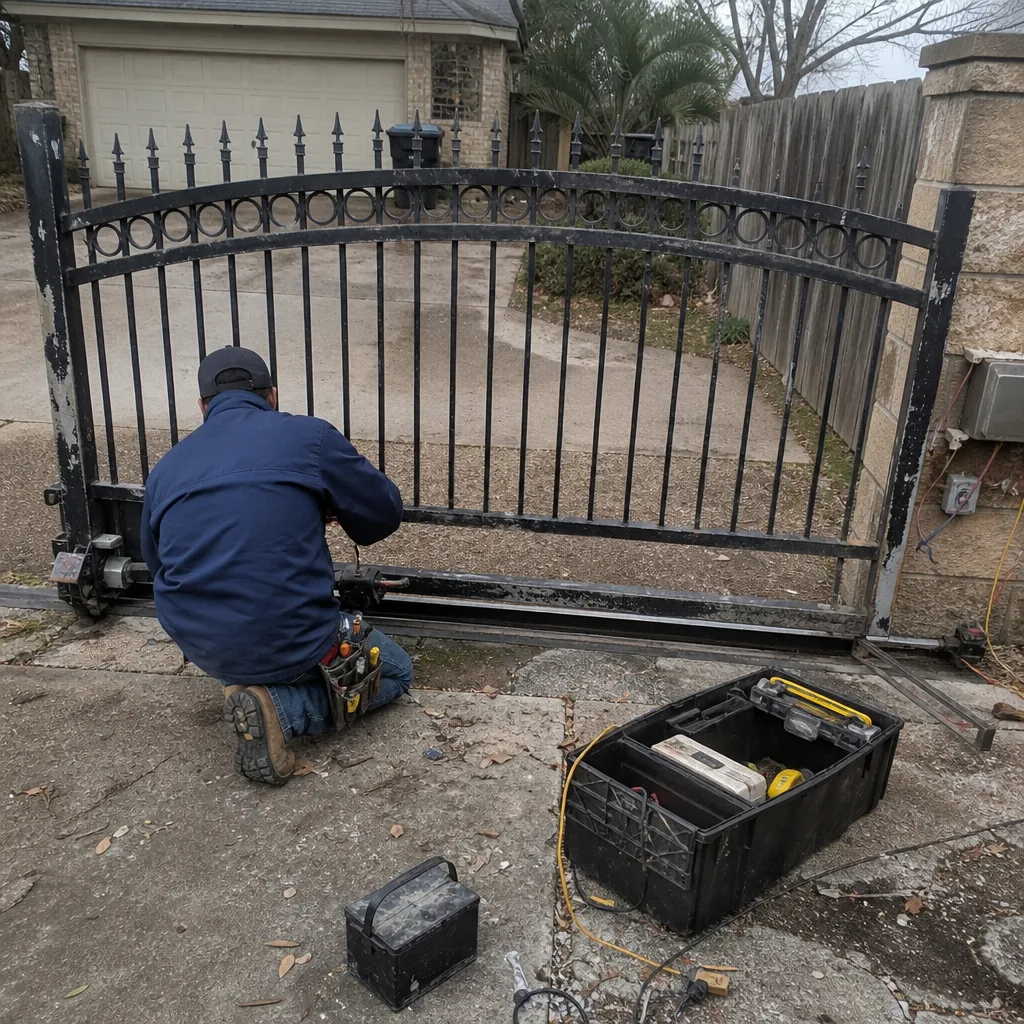 Before
 After
After Before
 After
After Before
 After
After