
Last updated October 16, 2026
 Wrought iron
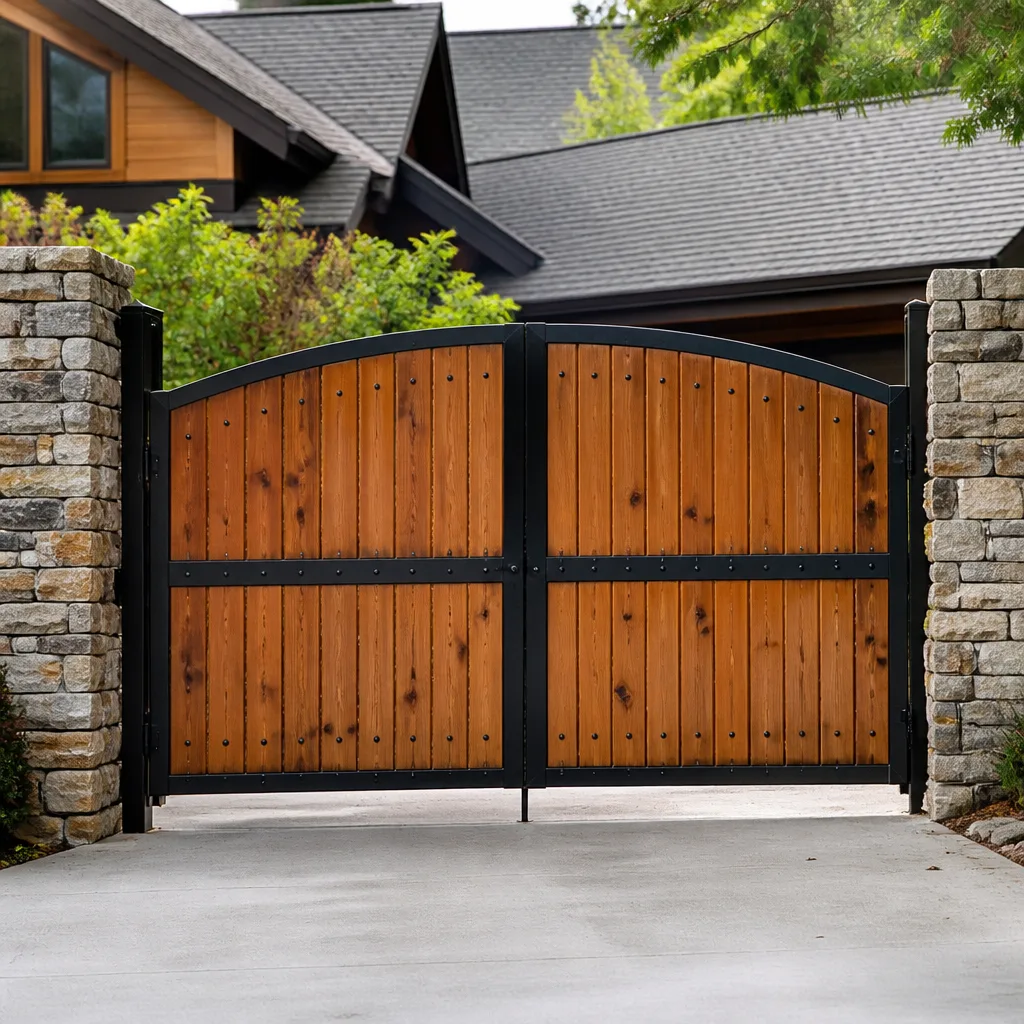 Wood & steel frame
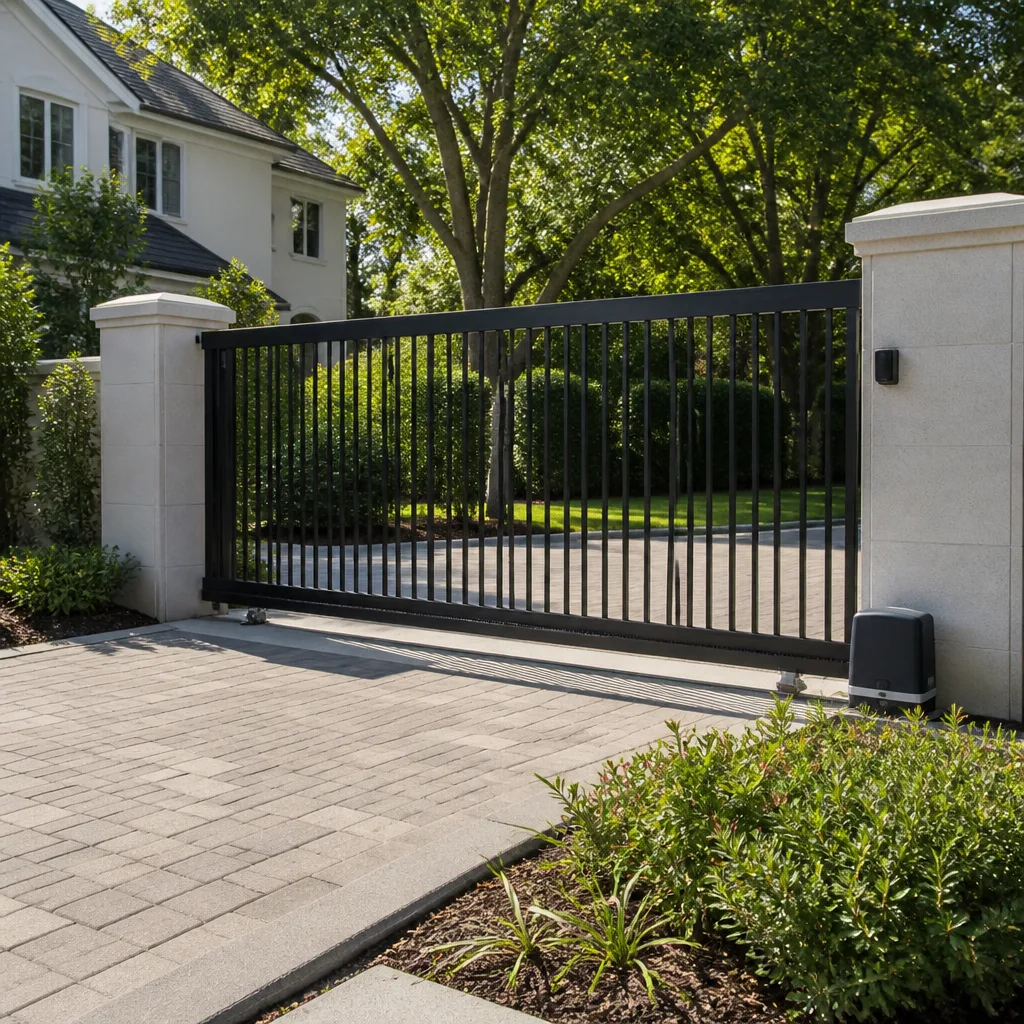 Sliding driveway gates
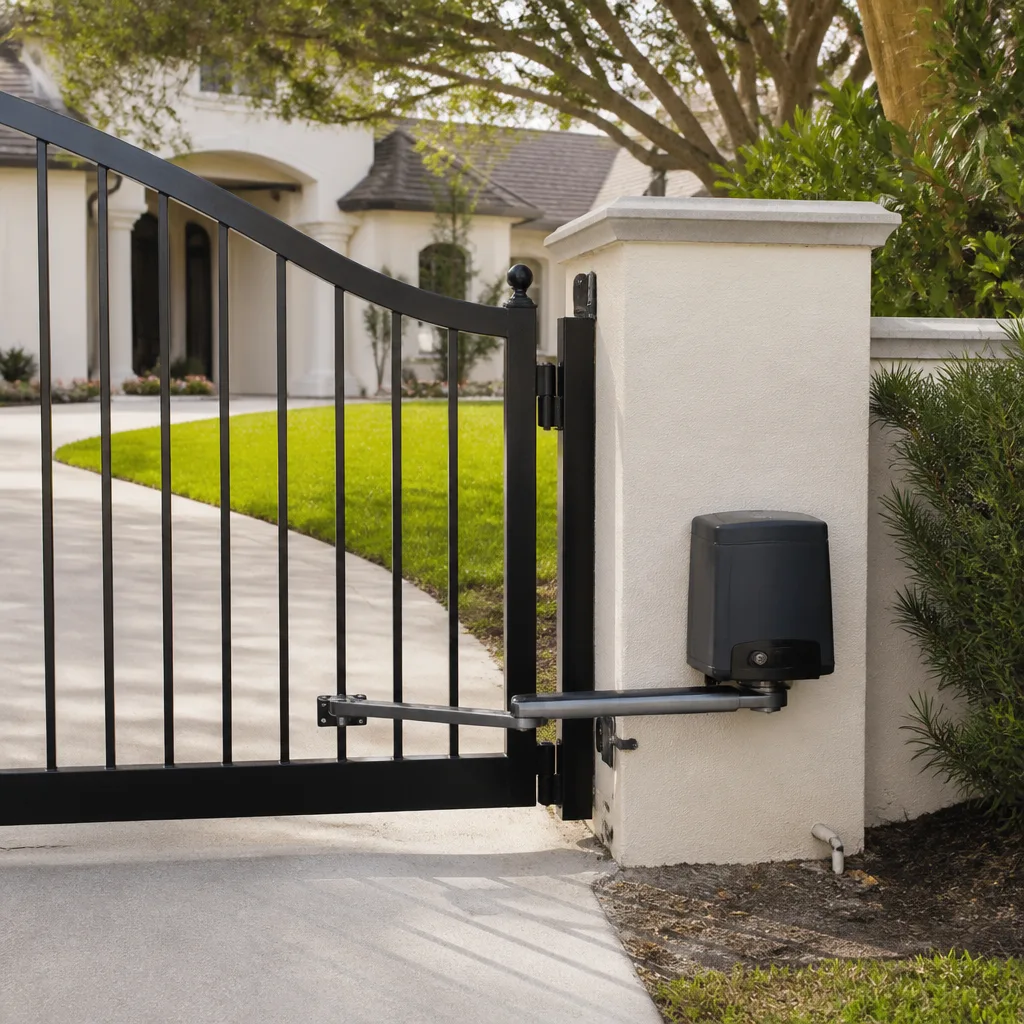 LiftMaster operators
Free on-site gate assessment - hinges, posts, and your LiftMaster or Nice gate operator checked before anything is quoted
The assessment is free and the quote is the invoice.
Get your free estimateGate Repair Maintenance Checklist for Dallas Homeowners
A gate that passes a standard 10-point inspection in March can be binding, sagging, or electrically unreliable by September. Not because the inspection was wrong, but because it was never calibrated for what a Dallas summer actually does to hardware. Most maintenance checklists you’ll find online read like they were written for a mild coastal climate, where posts stay put, grease stays greasy, and rubber doesn’t bake into brittle crumbs by the Fourth of July. Dallas is a different animal. The clay soil under our yards moves more than a foot vertically between a wet March and a dry August, and that movement telegraphs straight into your gate posts, hinges, and operator mounting brackets. This guide gives you a month-by-month maintenance routine built around the two realities every Dallas homeowner lives with: shifting soil and relentless heat. You’ll learn what to check, what to lubricate, what to leave alone, and what to call in before a quarter-inch of lean turns into a $1,200 repair.
Styles & brands we work with
Quick Answer
A Dallas gate maintenance checklist should cover post plumb, hinge lubrication, operator battery health, rubber seal condition, and sensor alignment, checked monthly during summer and after any heavy rain. The two factors that most affect gate longevity in Dallas are North Texas clay soil shifting posts seasonally and August heat degrading rubber, grease, and painted steel finishes faster than nearly anywhere else in the country. Proper lubrication with high-temp products and quarterly post checks prevent the majority of our Gate Repair services calls in Dallas.
Table of Contents
- Why Dallas Soil Is the Root of Most Gate Problems
- The Month-by-Month Dallas Gate Maintenance Checklist
- Lubrication That Survives a Dallas Summer
- How to Check Gate Post Plumb After a Wet Season
- Operator Battery and Board Checks You Can Do Safely
- What Voids a Gate Warranty and What the Kingswell Promise Covers
- Common Mistakes to Avoid
- When to Call a Professional
- Frequently Asked Questions
- The Bottom Line
Why Dallas Soil Is the Root of Most Gate Problems
Before we get to the checklist itself, you need to understand what you’re up against. North Texas sits on expansive clay soil, mostly Houston Black and Austin Chalk formations. This clay swells when wet and shrinks when dry. A single cubic yard of Dallas clay can change volume by 10 to 15 percent between seasons. That movement is not subtle. When your gate post sits in a concrete footing poured two feet deep, and the surrounding soil heaves upward after a wet spring, the post moves with it. A quarter-inch of post lean at ground level becomes a half-inch of gate drop at the latch end, and that’s when you start hearing the scrape, feeling the bind, or watching the operator struggle to move a gate it used to swing effortlessly.
In our experience as Gate Repair in Dallas technicians, the single most common service call we run is not a dead motor or a snapped hinge. It’s a gate that worked fine in March and started dragging in August because the post moved and nobody noticed until the actuator, the motorized arm that pushes the gate open, started pulling noticeably harder. Once that happens, the actuator wears faster, the board draws more current, and a $90 post adjustment becomes a $400 actuator replacement.
What this means for a maintenance checklist is simple: you cannot set a gate post once and forget it. You have to measure it, record it, and check it again after every significant weather shift. The calendar will tell you when to check. The checklist below follows Dallas weather patterns, not generic seasons, because our wet season is not a season. It’s a series of downpours from March through May, followed by a drought that runs June through September, punctuated by the occasional gully-washer in October. That pattern, repeated year after year, is what your gate lives through.
The Month-by-Month Dallas Gate Maintenance Checklist
This is not a list you do once in the spring and once in the fall. Dallas weather punishes gates on a continuous basis, so the checklist below is organized by month, with specific tasks tied to what that month’s weather actually does to hardware. We’ve kept it practical: each month has two or three tasks, each takes ten minutes or less. None require taking the gate apart.
January and February
- Check for frost heave at the gate posts. Dallas gets enough freeze-thaw cycles to move shallow footings. Look for hairline cracks in the concrete around the post base and any visible gap between the footing and the soil. A small crack that opens in January will widen in March.
- Inspect all hinge bolts and mounting bolts for tightness. Cold shrinks metal, and bolts that were snug in October may have loosened slightly. Use a socket wrench, not pliers, and check both gate leaves.
- Run the gate through a full open and close cycle two times. Listen for any change in sound. A healthy swing gate makes a steady, soft hum. A click, a grind, or a hesitation at the halfway point is an early warning that the actuator or chain is working harder than it should.
March and April
- Measure post plumb on every gate post. This is the most important maintenance task of the year in Dallas. The spring rains are beginning, and the clay is starting to swell. A 4-foot level is the right tool. Place it on two adjacent faces of the post and note any gap at the bottom or top. More detail in the post plumb section below.
- Check the gate latch and receiver alignment. Even a small post shift moves the latch point. If the latch no longer falls cleanly into the receiver, the post is moving. If you have an electric gate with a magnetic lock or solenoid lock, verify the lock engages without the tech having to shove the gate at the last inch.
- Clear the weep holes in the bottom rail of a steel or aluminum gate. These small holes are built into the lower frame channel to let water drain. When they clog with dirt, silt, and pollen, water pools inside the rail, accelerates rust, and adds weight. A stiff wire or a small screwdriver opens them back up.
May and June
- First heat check. When the first sustained 95°F week arrives, run the gate and feel the operator housing with the back of your hand. Warm is normal. Hot to the touch after a single cycle is not. A hot motor housing means the gate is binding or the actuator is undersized for the gate’s weight, and the heat will only get worse through July.
- Lubricate all hinge pivots, the actuator piston, and the chain or belt tension surfaces. Use the right lubricant, not whatever is on the garage shelf. Details below, but the short version is this: in Dallas, you need a dry-film or high-temp grease that will not melt off the hinge and run down the gate face when it’s 104°F in July.
- Inspect rubber seals, edge strips, and weatherstripping. This is the month rubber begins to break down visibly. Run your finger along the bottom seal. If black residue comes off on your hand, the rubber is oxidizing and will crack by August.
July and August
- Peak heat maintenance: check every rubber and plastic component. This includes the safety edge sensors on an electric gate, the photocell housings, covers on the lift motor, and the capacitor boots if yours has an AC operator. Look for surface crazing, hairline cracks, and loss of flexibility. Blow out dust from the control board area using canned air or a clean, dry paintbrush. Do not spray water into the operator housing.
- Lubricate a second time. This is the month that separates the products that actually hold up in Dallas heat from the ones that melt down. See the lubrication section below for the differences.
- Run the gate at its hottest point of day, around 3 or 4 p.m. Heat expands metal and changes the friction profile. A gate that runs cleanly at 9 a.m. may drag at 3 p.m. If it does, the clearance was set too tight on a cool day, and the fix is a simple adjustment rather than a part replacement.
September and October
- Post-summer post check. The soil is at maximum shrinkage after three months of drought. Post lean that was not present in March often shows up now. Measure plumb again using the same method. If you recorded measurements in March, compare the numbers rather than relying on memory.
- Check the operator battery backup. If your gate has a battery backup, this is the month to test it. Disconnect power at the breaker (not the switch on the side, which often only controls the control circuit) and run the gate on battery. A 12V sealed lead-acid battery in a Dallas operator typically lasts 2 to 3 years. If the gate runs slow or the control board shows a low-battery warning, replace the battery before the October storm season knocks out power.
- Inspect and tighten all chain or belt tension. Temperature swings loosen chains. A chain that sags more than half an inch at the midpoint is too loose and will wear the sprockets. If you’re unsure about exact tension, the general rule is firm but not guitar-string tight.
November and December
- Prepare for colder weather. Drain any standing water from the operator housing if the seal has leaked. Inspect the weep holes again. Rodents look for warm places in the fall, and operator housings are attractive. Look for chewed wire insulation and nesting material.
- Lubricate with a cold-stable product. If you used a summer-specific grease in July, it may stiffen in December. A good year-round option is a lithium-based grease rated from -20°F to 300°F. We’ll cover this in the lubrication section.
- Check the full close and lock sequence. Verify the gate fully closes, the latch engages, and the operator stops without slamming. This matters more in winter, when wind loads on a large gate increase and can blow the gate hard against the post if the operator’s close limit is off.
Lubrication That Survives a Dallas Summer
Here is where most generic gate maintenance lists fail Dallas homeowners. They say “lubricate hinges and rollers” and leave it at that. What they don’t tell you is that the wrong lubricant in North Texas becomes part of the problem rather than the solution. When the gate surface hits 120°F on a July afternoon, a standard white lithium spray or a penetrating oil like WD-40 thins out, runs down the hinge pin, and leaves a gummy film that attracts dust, pollen, and grit. Within three weeks, you have a hinge that is dirtier than it was before you lubricated it, and the paste of oil and fine dust is grinding away at the metal.
In Dallas, we use two classes of lubricant depending on the component. For hinge pins, pivot bolts, and other metal-on-metal points that hold weight, use a high-temp lithium grease rated to at least 300°F. This stays in place when the gate face is hot enough to fry an egg, and it does not break down into a runny liquid. Lucas Oil’s Red N Tacky is a common product you’ll find at any auto parts store in Dallas, and it works well. For chains and threaded components, a dry-film lubricant with PTFE is preferable because it does not attract dust the way a wet oil does. DuPont’s Teflon chain-saver is one we’ve seen hold up through full Dallas summers.
What should you avoid? Penetrating oils like WD-40, PB Blaster, or Liquid Wrench are for freeing stuck fasteners, not for long-term hinge lubrication. They flush out the existing grease and then evaporate, leaving the hinge drier than it was before. Motor oil is worse: it’s designed for closed crankcases, not exposed hinges, and it attracts dirt aggressively. Cooking spray, which everyone has in the kitchen, is the worst offender. It leaves a sticky residue that bakes into a varnish in Dallas heat.
Apply lubrication every six months at minimum, and every three months if your gate faces west and gets full afternoon sun. A west-facing black steel gate in Frisco or McKinney can hit 150°F surface temperature. That specific heat load breaks down grease faster than age alone. When you lubricate, move the gate through a full cycle afterward to work the product into the bearing surfaces. Wipe off any excess with a clean rag so it does not collect dust.
How to Check Gate Post Plumb After a Wet Season
Post plumb is the single most predictive measurement for gate longevity in Dallas. Plumb simply means perfectly vertical. A post that is out of plumb by as little as a quarter-inch over a four-foot level is loading every hinge, the latch, and the operator with stress that was never part of the design. The gate still opens and closes, so you don’t notice it, but the hardware is slowly failing.
Here is the exact method we use when checking a gate post in the field. You can do this in ten minutes with a four-foot level.
- Place the level flat against the post, parallel to the gate’s swing direction. This is the direction the gate pushes and pulls, the direction where the post will lean first. Look at the bubble. If it touches or crosses the line, the post is out of plumb.
- Rotate the level 90 degrees and check the perpendicular face. Many posts lean in two directions at once, and you will not see that from a single measurement. No matter what the level shows, write both readings down or take a photo.
- Record the measurement date and approximate soil condition. Was it wet? Dry? Had it just rained? The value of your record is not the number itself. It’s the change between readings.
- Check every post that carries gate hardware. This includes the hinge post on the gate side and the latch post on the closing side. Gate posts set in the middle of a double-gate opening are the most vulnerable because they carry load in both directions.
- If the post is out of plumb by a quarter-inch or more, call a gate company before it gets worse. The fix is usually a post stabilization or re-setting, not a gate replacement. If you wait until the gate drags or the latch will not reach, the repair bill climbs fast because now the hinges, the latch, and the actuator have all been running under load for months.
A quarter-inch of lean sounds small, but it translates to a gate that no longer hangs straight. The latch side erodes, the operator cycles harder, and the hinge bearings wear in a way no amount of lubrication will fix. In Dallas, where clay movement is essentially guaranteed, we tell homeowners to measure posts every March and again every September. If you want Gate Repair Warning Signs: A Dallas Homeowner’s Reference Guide, this seasonal check is where they start. If the number does not change across a full year, you can extend to annual checks. But until you have both numbers in hand, you’re guessing.
Operator Battery and Board Checks You Can Do Safely
Gate operators are low-voltage devices in most residential installations. The motor runs on 12V to 24V DC, which is safe to work around. The danger comes from the high-tension springs on some swing gate designs and the line-voltage power running into the operator. Those are not things to poke at with a screwdriver. But there are several operator checks any Dallas homeowner can safely do before calling a technician, and these checks catch the majority of operator failures we see.
- Power down first. Flip the breaker at your main panel, not just the switch on the operator. Then open the operator cover. Look for rust, white corrosion on the battery terminals, or any black scorch marks on the control board. Scorch marks on the board are a clear sign the board is failing, and a replacement is in your future.
- Check the battery voltage. If you have a multimeter, set it to DC volts and touch the battery terminals. A healthy 12V sealed battery shows 12.6 to 12.8 volts at rest. Below 12.2 volts, the battery is weak. Below 11.8, it is effectively dead and should be replaced. If you don’t have a multimeter, note whether the gate operates slower on battery power than on house power.
- Look at the board for bulging capacitors. Capacitors are the small cylinders standing on the board. A healthy capacitor has a flat top. A bulge or split top is a capacitor that has failed, and the board will follow. This is the canary-in-the-coal-mine for operator failure in Dallas, because our heat accelerates capacitor aging more than any other single component.
- Check all wire connections. Look for loose screw terminals, especially the power leads and the sensor wires. Heat and vibration combine to back out terminal screws over time. If you see one loose, tighten it with a properly-sized screwdriver. Do not overtighten, which can crack the terminal block.
- Run the gate one full cycle with the cover still open. Look and listen. The motor should start smoothly and run steadily. A jerky start, a humming noise without movement, or a sudden stop at the same point each time tells you something specific: a damaged capacitor for the hum, a worn limit switch for the stop, or a failing motor for the jerk.
If any of these checks turn up something wrong, don’t try to fix a control board or a motor on your own. The board on a DoorKing or Elite operator is a multi-layer printed circuit assembly, and the tiny surface-mount components are not replaceable with a soldering iron from Home Depot. Call a technician. That’s when experience with the specific brand matters. We service Viking, Ghost Controls, DoorKing, and Elite operators across Dallas and the surrounding suburbs, and a tech who knows the system arrives already knowing what to check first.
What Voids a Gate Warranty and What the Kingswell Promise Covers
Here is something most homeowners never read until it’s too late: the manufacturer warranty on your gate operator has specific maintenance requirements, and skipping them can void coverage just as fast as a failed part. These requirements vary by brand, but two items appear on nearly every major operator warranty, including DoorKing and LiftMaster: the gate must be properly lubricated and the gate must be balanced and free-moving. A gate that binds, drags, or pulls against the operator is considered abuse, and the manufacturer can deny a warranty claim for a burned-out motor on that basis.
The practical takeaway: if your gate starts opening slower or the motor sounds strained, do not wait to address it. Every day of running under load is another data point the manufacturer can use to say the failure was environmental rather than mechanical. Most residential operator warranties run 2 to 5 years, and a bound gate is the easiest denial in the book.
What about the Portcullis Gate Repair Dallas home service area and the warranty we put on our own work? Every repair we perform carries the 365-Day Done Right Promise. That’s a written guarantee stamped on the repair invoice, and it’s simple: if the repair fails within 365 days, we come back and fix it at no charge. No parts cost, no labor, no trip fee. If the repair fails inside that period, the return visit is free. That guarantee is not conditional on you having lubricated every hinge on schedule. If our repair fails, we make it right. The Kingswell Guarantee behind it is broader still: a written price before any work starts, a real arrival window, a clean job site, and a written guarantee on the repair. Those four commitments are the same across every independently owned Kingswell company, including ours in Dallas.
The difference matters. A manufacturer warranty protects their product. Our guarantee protects our work. When it’s our work that failed, you don’t need to prove the gate was perfectly maintained. You just call. We answer. We come back.
Common Mistakes to Avoid
- Using the wrong lubricant, then lubricating more often to compensate. Penetrating oil flushes out grease and evaporates. The gate gets dryer, so you oil it again. Every cycle adds the solvent’s residue instead of the lubricant’s film. The hinge wears faster, not slower.
- Ignoring a quarter-inch gate drop because the gate still opens. A gate that hangs low means the post has moved or the hinge is wearing. The operator is working against more friction every day. The bill to fix a dropped gate now is a fraction of the bill for a burned-out motor later.
- Pressure-washing the operator housing. Gate operators are rated for weather, not direct water spray. A pressure washer forces water past the gaskets and into the electronics. Blow dust out with air and wipe the exterior with a damp rag instead.
- Setting the close force too high to compensate for a binding gate. Most Dallas operators have a force adjustment dial. Cranking it up so the gate closes harder does not fix the binding: it just pushes the gate through the resistance while the motor runs hot. A motor running hot in August fails sooner, guaranteed.
- Forgetting the gate during the gap between spring rain and summer heat. The May-to-June window is the most overlooked maintenance interval in Dallas. The soil has swelled, the gate has shifted, and the real stress is only beginning. This is when a five-minute plumb check catches the problem early.
- Replacing the operator before checking the gate hardware. A new operator on a binding gate is a new operator with a short life. We see this often: a homeowner replaces a burned-out actuator, and the new one fails two years later because the original cause, the post movement or the hinge wear, was never addressed.
When to Call a Professional
Some gate problems are obvious: the gate won’t open, the chain snapped, the operator makes a grinding noise you can hear from the kitchen. Those are easy calls. But a few scenarios are less obvious and still require a professional rather than a homeowner with a wrench. If your post is out of plumb by a quarter-inch or more, and the measurement came after a wet season, call someone who re-sets posts for a living. Cutting out a footing, re-pouring, and re-bedding the post is not a weekend project, and a gate that falls because the post gave way is a real hazard. If you see scorch marks on a control board, or the operator hums but does not move, the motor capacitor or the board has failed. Replacing a capacitor in the wrong configuration can damage a new board. If the gate jumps or stops dead at the same point in every cycle, that’s a mechanical bind inside the actuator or the arm, not something lubrication will resolve. And always, if the gate is a sliding gate with high-tension springs or a swing gate with mechanical springs, the spring tension is dangerous to adjust. Those springs store enough energy to break a hand.
Portcullis Gate Repair Dallas offers free estimates across Dallas and the surrounding suburbs. Call (325) 225-5440 and a live person answers, 24 hours a day, seven days a week. You’ll get a written price before any work starts, and every repair carries the 365-Day Done Right Promise in writing.
Frequently Asked Questions
Post re-setting or stabilization in Dallas typically runs $350 to $900 per post, depending on whether we can stabilize the existing footing with a helical pier or need to cut out and re-pour the concrete. A full new gate installation, when the post damage is beyond saving, is a different conversation entirely. Call (325) 225-5440 for an exact quote, and you’ll receive the price in writing before any work begins.
Every three months during the summer, and every six months the rest of the year, using a high-temp lithium grease on hinges and pivots and a dry-film PTFE lubricant on chains. West-facing gates absorb more afternoon sun and benefit from the more frequent schedule. If your gate faces west and you skip a July lubrication, you’ll see the hinge grease break down and run by early August.
Most common repairs, including hinge replacements, actuator swaps, and sensor realignments, are completed in one visit. If you call before noon on a weekday, we can usually have a technician out that day or the next morning with parts on the truck. More involved repairs, like post re-setting, take longer and are scheduled in advance because the concrete needs time to cure. Call (325) 225-5440 for the fastest real answer.
We carry service experience on nine major gate-operator brands including Viking, Ghost Controls, DoorKing, and Elite, plus LiftMaster, FAAC, BFT, Linear, and Mighty Mule. The technician who arrives already knows the specific system on the property because we ask about the operator brand when you call, not when we show up.
Yes. Most operator manufacturers, including DoorKing and LiftMaster, require the gate to be properly lubricated and free-moving, and they can deny a motor warranty claim if the gate was binding. Keep written records of your maintenance, and if your gate is already binding, gate installation or a hardware repair may make more sense than running the motor until it burns out.
A full inspection covers post plumb, hinge and roller condition, actuator wear, chain or belt tension, board and capacitor inspection, battery voltage, sensor alignment, safety edges, and latch operation. We write up everything we find and give you a recommended maintenance schedule based on what your specific gate actually needs, not a generic list. The inspection comes with a written price for any repair work you approve.
The Bottom Line
Dallas gates fail differently than gates anywhere else, because Dallas weather and Dallas soil are different. The clay moves your posts. The heat eats your rubber and grease. The checklist above is built around those two realities, month by month, so you catch the quarter-inch of post lean before it becomes a dropped gate, and you lubricate with products that stay put when the gate face hits 150 degrees. Do the monthly checks, keep records, and when something falls outside the normal range, call someone who will put a price in writing before turning a single bolt. Electric gate repair in Dallas does not have to be a guessing game. The maintenance is simple. The fixes are known. The company you choose should answer the phone and stand behind the work in writing. We do both.
Written by Dean Prescott, Owner at Portcullis Gate Repair Dallas, serving Dallas since 2008. Find more guides & resources on our blog.
See the difference
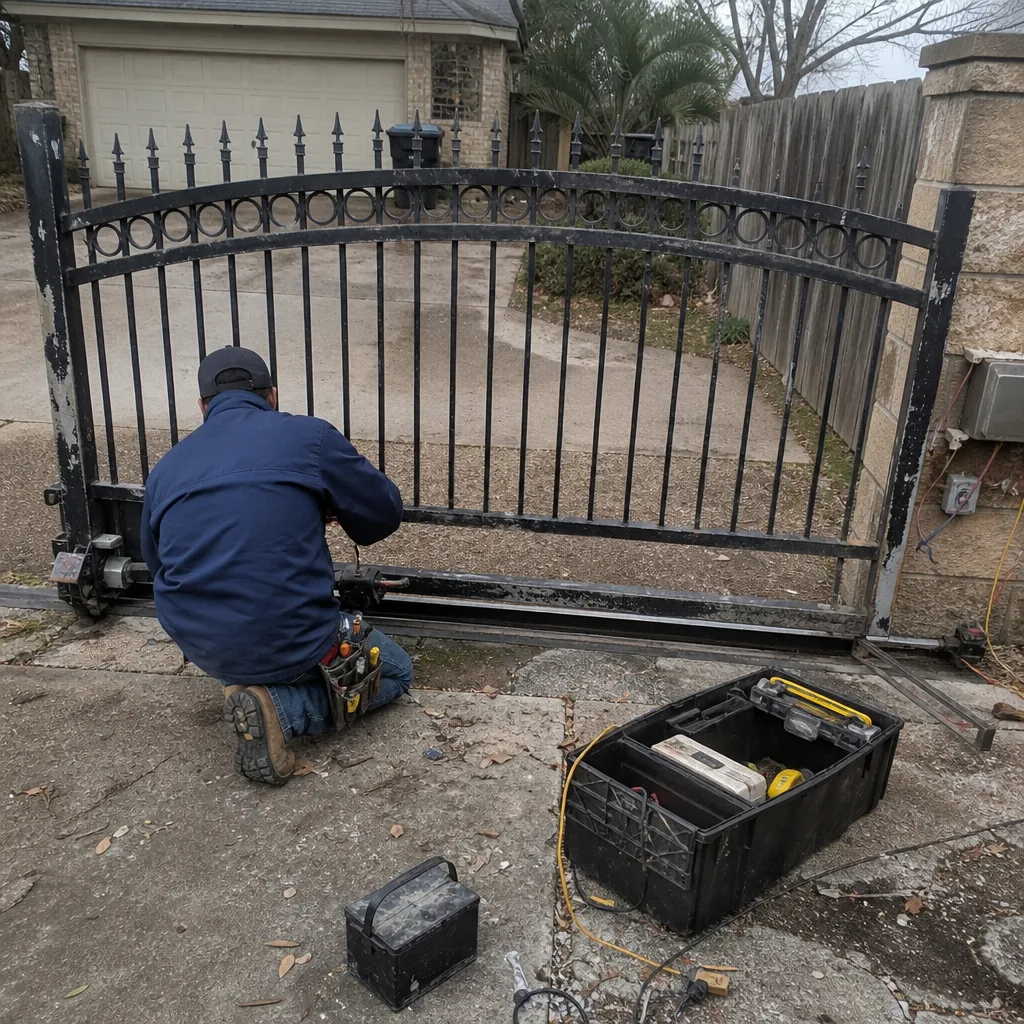 Before
 After
After Before
 After
After Before
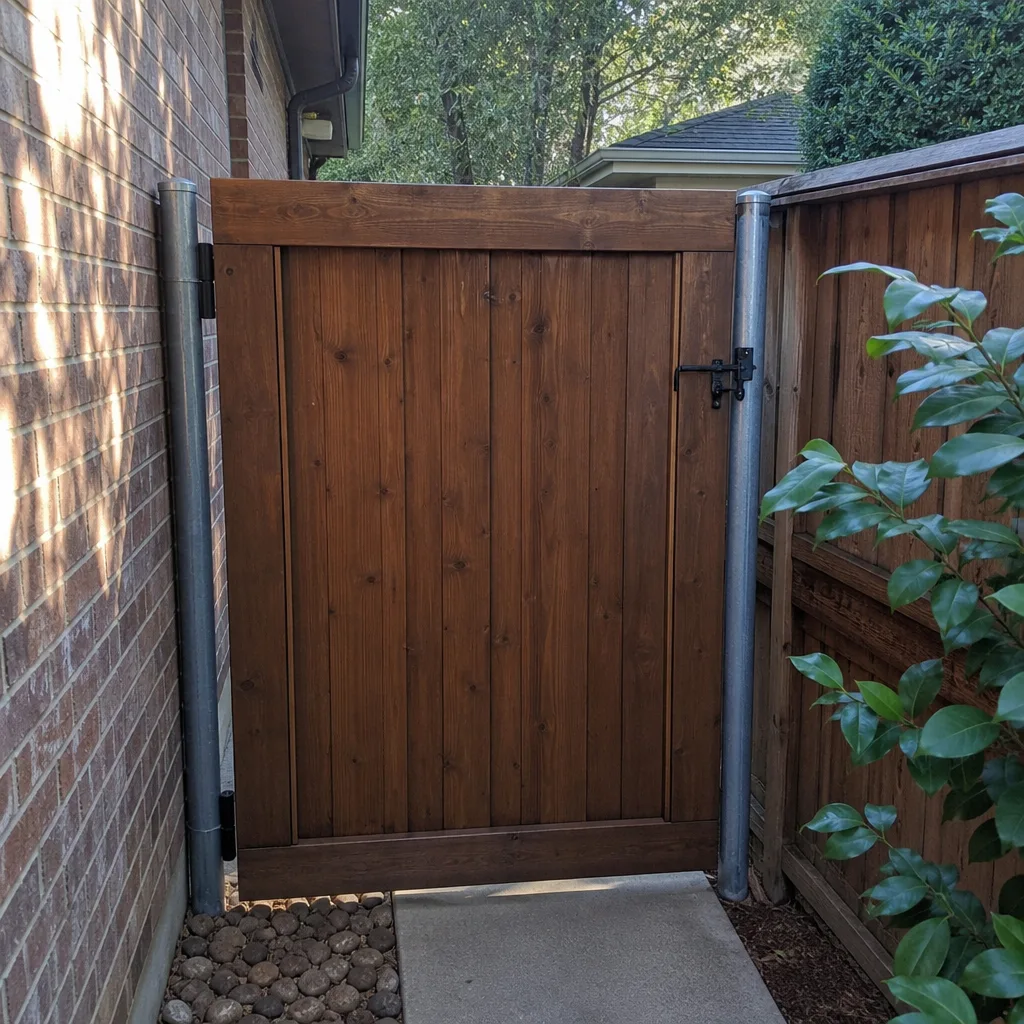 After
After